
How to Choose a Silicone Prosthesis?
In the global rehabilitation and orthopedic field, silicone prostheses/liners and orthopedic implants have become the mainstream choice for amputees, rehabilitation patients, and those seeking orthopedic restorations due to their advantages such as good biocompatibility, soft touch, high fit, durability, and anti-aging properties. However, faced with different materials, hardness, processes, and standards, many people are unsure how to choose accurately. This article takes a completely international user perspective, avoiding brand marketing and regional channel biases, focusing solely on objective and practical purchasing logic to help you select safe, suitable, and durable silicone prostheses.
I. First, clarify: What type of silicone prosthesis do you need?
Internationally, silicone prostheses/assistive devices are generally divided into three main categories with completely different uses. Choosing the wrong one directly affects the experience:
Silicone Liner (Core of Residual Limb Wearing): Placed on the residual limb, it cushions, reduces pressure, prevents allergies, prevents slippage, and protects the skin. It is the “close-fitting layer” of thigh/lower leg/upper limb prostheses and is essential for almost all amputees.
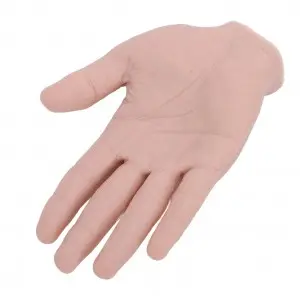
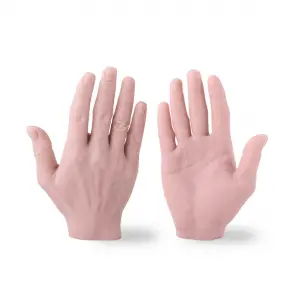
Decorative Silicone Prostheses (Appearance Restoration): Used for repairing fingers, partial limbs, and surface defects. Emphasis is placed on realistic appearance, skin tone, and texture, with function as a secondary consideration. Suitable for scenarios where aesthetics are paramount.
Functional Silicone Prostheses (Sports/Weight-Bearing Reinforcement): Featuring reinforced structures, high elasticity, and high load-bearing capacity. Adaptable to high-load scenarios such as walking, sports, and work. Emphasis is placed on strength and stability.Clearly define the intended use before looking at specifications to avoid wasting money.
II. Internationally Accepted Core Selection Standards (Must Read)
1. Material Grade: Choose only medical-grade, reject industrial silicone.
The global rehabilitation market’s unified bottom line: Silicone prostheses that come into direct contact with the skin/residual limb must be made of medical-grade silicone.
Complies with ISO 10993 series (biocompatibility, non-cytotoxicity, non-sensitizing, non-irritating). Complies with relevant FDA or CE contact standards. Stable material, sweat-resistant, aging-resistant, and does not easily discolor or become sticky. Inferior industrial silicone can cause: allergies, dermatitis, residual limb redness and swelling, rapid aging and deformation, and extremely high risks with long-term use.
2. Hardness and Elasticity: Determining Comfort and Weight-Bearing Capacity The international standard for determining hardness is the Shore scale; softer isn’t always better: Daily walking and light activity: Shore 10–25°, soft and skin-friendly, low pressure. High activity, sports, and weight-bearing: Shore 25–40°, strong support, less prone to deformation, higher durability. Sensitive skin/fragile residual limbs: Prioritize ultra-soft, hypoallergenic models with breathable microporous technology.
Elasticity considerations: Quick stretch recovery, no long-term deformation, no collapse, maintaining original fit even after repeated wear.
3. Fit: The most important indicator than brand. Globally, over 60% of prosthetic discomfort stems from poor fit.
The circumference, length, and shape of the residual limb must match; products that support 3D scanning/personalized customization are preferred. No pressure points, no slippage, no marks; won’t chafe the skin even after prolonged sitting/walking. For individuals with weight fluctuations or muscle atrophy, choose adjustable, highly stretchable styles.
4. Craftsmanship and Structure: Determines Durability and Breathability
One-piece molding: Seamless, tear-resistant, and waterproof. Microporous breathability: Prevents sweating during long-term wear, reducing the risk of eczema/infection. Thickened abrasion-resistant areas: Reinforced load-bearing areas extend lifespan. Skin tone simulation: Natural texture, blood vessels, and skin tone, suitable for exposed environments.
5. International Certifications and Safety Reports (Hard Procurement Indicators)
When purchasing across borders/in bulk, be sure to confirm:
Biocompatibility report (ISO 10993-5 / ISO 10993-10)
Tensile strength, anti-aging, and abrasion resistance test reports
Sterility/hypoallergenicity, free of harmful substances (phthalates, heavy metals) testing
III. Precise Selection Based on Usage Scenarios (Globally Applicable)
1. 1. Daily Home Use / Light Walking
Requirements: Comfortable, breathable, low pressure
Recommendation: Medical-grade hypoallergenic soft silicone + microporous breathable material, Shore 10–25°, simple basic design
Key Features: Hypoallergenic, easy to clean, easy to wear
2. Work / Long-duration Activities
Requirements: Good support, non-slip, durable
Recommendation: Medium hardness + non-slip inner layer + edge reinforcement, Shore 20–30°
Key Features: Less prone to shifting, reduces residual limb fatigue, anti-friction
3. Sports / Outdoors / High Load
Requirements: High strength, stability, tear resistance
Recommendation: High-elasticity reinforced silicone, Shore 25–40°, with reinforced structure
Key Features: Passes ISO 10328 prosthesis strength test, suitable for dynamic scenarios such as running, walking, and climbing
4. Sensitive Skin / Diabetic Foot / Fragile Limbs
Requirements: Extremely gentle, skin-protecting
Recommendation: Additive-free, hypoallergenic medical-grade silicone, smooth and non-irritating surface, thickened cushioning layer
Key Points: Reduces the risk of pressure sores, damage, and infection, improving long-term wear safety
5. Decorative Repair (Fingers/Body Surface)
Requirements: High simulation, natural, thin
Recommendation: Texture replication, skin tone customization, soft and conforming decorative silicone
Key Points: Color matching, uniform thickness, invisible wear
IV. Global User Avoidance Guide
Don’t blindly pursue “ultra-soft” products. Excessive softness leads to deformation, insufficient support, instability while walking, and significantly reduced durability.
Don’t buy uncertified low-priced products. Cross-border channels are complex; low-priced silicone without testing reports poses health risks.
Don’t ignore size and customization. Universal designs rarely fit perfectly; personalized customization is key to long-term comfort.
Don’t neglect cleaning and maintenance. Choose easy-to-clean, quick-drying, and disinfectant-resistant styles for better hygiene in the long run.
V. How to Determine if a Silicone Prosthesis is Qualified (Quick Self-Test)
Smell: No pungent odor, only a slight silicone smell.
Touch: Smooth to the touch, not sticky, and quick to rebound.
Stretch: Quickly recovers its shape after moderate stretching, without whitening or cracking.
Apply: No skin irritation, stuffiness, redness, or itching.
Look: Smooth workmanship, no burrs, no bubbles, and no color difference.
VI. Summary: A Globally Acceptable Selection Formula
Medical-grade silicone + Appropriate hardness + Precise fit + International safety certification + Matching usage scenario = Good silicone prosthesis
No matter which country you are in, whether for rehabilitation or shaping, daily use or sports, following this standard will help you choose a safe, comfortable, and durable silicone prosthesis product for long-term, more reliable, and stable use.
Post time: Mar-20-2026