
Logistics Selection for Wholesale Import of Silicone Breast Patches
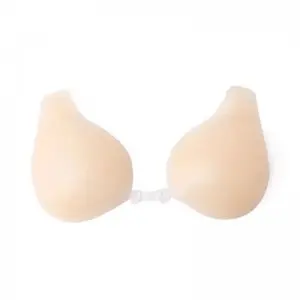
As a core product in the women’s shaping category, silicone breast patches have become a popular choice for global wholesale procurement due to their softness, skin-friendliness, and excellent shaping effect. For overseas wholesale importers of silicone breast patches, logistics selection not only directly affects procurement costs and delivery time but is also closely related to the safety of the goods throughout the entire process and the compliance of customs clearance in the destination country. Combining the material characteristics of silicone products with the practical standards of the international logistics industry, this article provides professional logistics selection strategies for the wholesale import of silicone breast patches from the dimensions of transportation mode selection, compliance document preparation, key points of packaging protection, and customs clearance techniques, helping importers achieve efficient, low-cost, and zero-risk cross-border procurement.

I. Comparison of Core Transportation Methods: Choose the Right Solution for Your Needs
Silicone breast pads are ordinary plastic products, without flammable, explosive, or corrosive properties. They can be transported using three main methods: international air freight, sea freight, and international express. These three methods differ significantly in terms of timeliness, cost, and capacity. Importers need to comprehensively consider key factors such as purchase volume, delivery cycle, and destination. The following is a practical selection reference:
International Air Freight: Time-Saving Priority, Suitable for Small-Batch Urgent Purchases
Air freight is the fastest way to import silicone breast pads for wholesale. Mainstream routes, such as from China to major cities in Europe, America, and Southeast Asia, take only 3-7 days. This is suitable for urgent scenarios such as exhibition preparation, holiday promotion replenishment, and sample procurement. The billing method is based on the greater of actual weight or volumetric weight. It is recommended that the weight of a single shipment be controlled within 500kg. If the purchase volume is too small (e.g., less than 50kg), international express (DHL/FedEx/UPS) can be directly selected for door-to-door delivery.
Core Advantages: Simplified customs clearance process, low inspection rate, and low cargo damage rate; Disadvantages: High unit transportation cost, approximately 5-10 times that of sea freight, and strict restrictions on the size and weight of individual items (generally no more than 100kg per item, and the sum of length, width, and height ≤ 300cm).
Suitable Scenarios: Initial trial orders, small-batch replenishment, and wholesale purchases with high timeliness requirements (such as emergency stockpiling before peak seasons in European and American markets).
International Sea Freight: Cost-effective, suitable for large-volume regular purchases. Sea freight is the optimal choice for large-scale wholesale purchases of silicone breast pads. Charged by container (20ft/40ft) or bulk cargo (cubic meters), the unit transportation cost is only 1/5-1/10 of air freight, and there are less restriction on cargo size and weight. A single container ship can carry several tons of silicone breast pads, suitable for regular purchases planned on a quarterly/annual basis. Mainstream shipping routes from China to major ports in Europe and America take 25-45 days, while routes to Southeast Asian ports take only 7-15 days. Routes to remote ports or those requiring transshipment take approximately 1-2 months.
Core Advantages: Extremely low cost, ample capacity, suitable for large-scale procurement; Disadvantages: Slower transit times, potential delays due to port congestion and ocean currents, more complex customs clearance procedures for full container loads, and a higher inspection rate than air freight.
Suitable Scenarios: Long-term, stable, large-volume wholesale procurement and inventory preparation, suitable for importers purchasing over 1 CBM or 500 kg.
Sea-Air Intermodal Transport: Balancing time and cost, suitable for medium-volume procurement.
If importers want to control costs but are unwilling to accept the long transit times of pure sea freight, they can choose a compromise solution: goods are first transported by sea to a transshipment port (such as Hong Kong, Singapore, or Dubai), and then transferred by air to the core city of the destination country. The total transit time is approximately 5-10 days, and the cost is 30%-50% lower than pure air freight. This method is suitable for medium-volume wholesale purchases with quantities between 50kg and 500kg and certain time-sensitive requirements.
II. Compliance Document Preparation: The Core Prerequisite for Customs Clearance
Although silicone breast patches are considered ordinary goods, complete and compliant documents are still required for international transportation and customs clearance in the destination country. Failure to provide any of these documents can easily lead to customs detention, delays, or even return of the goods. The core documents must be divided into two categories: essential shipping documents and customs clearance documents specific to the destination country. Specific requirements are as follows:
Basic Shipping Documents: Applicable to all modes of transport.
Commercial Invoice and Packing List: Must be prepared in English or the official language of the destination country, clearly indicating the goods name (recommended: “silicone nipple cover/silicone bra pad”), quantity, unit price, total value, material (100% silicone), and packaging method. The information must be completely consistent with the actual goods to avoid underreporting/overreporting the value, which could lead to customs clearance risks.
Bill of Lading: For sea freight, a Bill of Lading (B/L) is required; for air freight, an Air Waybill (AWB) is required. This serves as proof of title and the basis for delivery. The consignor/consignee information, port/airport of destination, and weight/volume of the goods must be accurately filled in.
MSDS Report: This is the Material Safety Data Sheet. Although silicone is an inert material with no hazardous properties, international sea/air freight requires a GHS-compliant MSDS. The report must specify the silicone composition, physicochemical properties, storage requirements, etc. An English version is required for exports to the EU; for exports to multiple countries, multilingual versions can be prepared as needed.
Cargo Transport Condition Certificate: A mandatory document required by shipping companies/airlines. It must be obtained from a third-party testing agency, clearly stating that the silicone breast patches are “non-restricted general cargo.” The certificate is valid for one year and must be renewed upon expiration.
Customs Clearance Documents for Destination Countries: Precise Preparation by Region
Customs in different countries/regions have varying requirements for imported silicone breast pads. Importers need to verify and prepare these documents in advance. The following are the key requirements for the three core markets:
US Market: A Custom Bond (customs deposit, available as an annual bond or a one-time bond; for long-term purchases, an annual bond is recommended for better value) must be purchased in advance, and a Power of Attorney (POA) must be obtained. It is also necessary to confirm that the consignor and consignee have IOR (Registered Importer) qualifications.
EU/UK Market: The importer’s VAT number is required. Import VAT must be paid upon customs clearance, and deductions can be applied for later. If the purchase volume exceeds the EU customs threshold, a Certificate of Origin (CO) is required to enjoy tariff preferences.
Southeast Asia/Australia Market: Australia requires the importer’s ABN number. Some Southeast Asian countries (such as Indonesia and Malaysia) require import licenses in advance. Wooden packaging requires a fumigation certificate (ISPM15 standard).
III. Professional Packaging Protection: Key to Preventing Transportation Damage
Silicone breast pads are soft and not easily broken, but they are susceptible to deformation due to compression and friction during long-distance international transport. Damage to the outer packaging can easily lead to loss of goods. Therefore, it is necessary to follow internationally accepted packaging standards and take into account the product characteristics to ensure proper protection. The core requirements are as follows:
Basic Packaging Specifications: Suitable for all modes of transport
Outer Packaging: Five-layer corrugated cardboard boxes (compression resistance ≥200kPa) are preferred. Single-layer thin boxes and second-hand boxes are prohibited. The boxes must be free of damage, moisture, and old markings. The weight of a single box should ideally be kept below 20kg. Boxes exceeding 20kg require additional ≥1.5cm wide strapping for reinforcement. Boxes exceeding 50kg are recommended to be transported on pallets.
Inner Protection: After each silicone breast pad is individually packaged, it should be placed inside bubble wrap (≥3mm). Wrap items in thick (or pearl cotton) packaging. Multiple items in the same carton must be separated by corrugated partitions to prevent friction and compression. Fill any gaps inside the carton with stuffing to ensure no displacement during shaking tests and to prevent deformation during transport. Sealing and Labeling: Seal the carton with high-strength tape using a “cross/kingfish” method, covering all gaps. Do not use transparent tape or double-sided tape. Clearly print shipping and receiving information in English on the outer carton (name, address, contact information, postal code), and label with warning signs such as “Fragile,” “Keep Dry,” and “This Side Up.” Securely attach the waybill and seal it tightly to prevent it from falling off.
Packaging Optimization by Transportation Method
Air Freight/International Express: Single parcel weight not exceeding 30kg (50kg for some express services), sum of length, width, and height ≤ 200cm, to avoid oversized charges;
Sea Freight: For full container load (FCL) shipments, cartons must be palletized and wrapped to prevent cargo from tipping over; for less-than-container load (LCL) shipments, shipping marks (including port of destination, product name, quantity, and gross weight) must be clearly marked on the outside of the cartons for warehouse sorting and pickup.
Special Compliance Requirements
The EU has implemented the PPWR regulation since 2026, requiring packaging materials to be recyclable, with minimal overfilling and a porosity ≤ 25%. Importers must choose environmentally friendly and biodegradable packaging materials to avoid fines for non-compliant packaging; the US, Canada, Australia, and other countries have strict controls on wooden packaging. If using log pallets/crates, fumigation treatment and a fumigation certificate are required in advance; otherwise, goods may be detained and destroyed.
IV. Logistics Service Provider Selection: Controlling Service Quality Throughout the Process
The logistics efficiency of importing silicone breast pads largely depends on the professionalism and global network coverage of the service provider. Importers need to select a suitable service provider based on the mode of transport, prioritizing three core indicators: customs clearance capabilities, after-sales response, and route resources. The following are selection suggestions for different types of service providers:
International Express Giants (DHL/FedEx/UPS): Suitable for Small-Batch Door-to-Door Procurement
These service providers focus on air freight, providing end-to-door service, including pickup, transportation, customs clearance, and delivery. Importers do not need to handle multiple stages themselves, resulting in high customs clearance efficiency and real-time tracking of logistics. Suitable for small-batch procurement and sample purchases under 50kg. Core advantages include standardized service, fast after-sales response, and compensation for lost/damaged goods as agreed. Disadvantages include higher costs and strict requirements for packaging.
International Freight Forwarders (Sinotrans/Kehieschner/Jincheng Logistics): Suitable for Medium to Large-Volume Customized Needs
Freight forwarders can integrate air, sea, and land transportation resources to customize exclusive logistics solutions for importers (such as full container load (FCL) sea freight, sea-air combined transport), and provide value-added services such as document processing, customs clearance, warehousing, and distribution. Suitable for medium to large-volume wholesale purchases of 50kg or more. Professional freight forwarders are familiar with the international transportation process for silicone products, can assist importers in preparing compliant documents, and can resolve customs clearance issues in the destination country. Their freight rates offer more room for negotiation than international express delivery. It is recommended to choose a freight forwarder with experience in transporting silicone products and overseas warehouse coverage in the destination country.
Shipping Companies/Airlines (Maersk/COSCO Shipping/Air China): Suitable for Large-Volume Direct Shipping Purchases
If the importer is making long-term, large-scale purchases (such as FCL sea freight), they can directly sign contracts with shipping companies/airlines, enjoying first-hand space resources, more transparent pricing, and higher space stability. For example, Maersk covers routes to over 130 countries worldwide, while COSCO Shipping offers excellent value for money on routes to China, Japan, South Korea, and Southeast Asia. These routes are suitable for securing long-term partnerships with suppliers, locking in fixed shipping slots, and reducing logistics costs.
V. Practical Guide to Avoiding Pitfalls: Key Techniques for Reducing Logistics Risks
1. Verify Product Classification and Tariffs in Advance:** Silicone breast pads are generally classified as “Plastic Products – Clothing Accessories” in customs codes. Importers need to check the tariff rates of the destination country in advance (e.g., approximately 7.5% in the US, approximately 9.7% in the EU) to avoid overpaying tariffs or delaying customs clearance due to incorrect classification.
2.Avoid Mixing with Other Categories:** Silicone breast pads must be packaged and declared separately. Do not mix them with liquids, pastes, or products containing batteries, otherwise it will increase the probability of customs inspection, and may even lead to the entire shipment being detained due to non-compliance of other categories.
3. Purchase Logistics Insurance:** For sea freight, it is recommended to purchase all-risk insurance. For air freight/express delivery, cargo transportation insurance is recommended. The premium is approximately 0.3%-0.5% of the value of the goods. If the goods are lost, damaged, or delayed, compensation can be made according to the insurance agreement, reducing procurement losses.
4. Confirm Supplier Logistics Cooperation in Advance:** Choose suppliers who can assist in preparing MSDS. Suppliers who provide reports and transportation certificates can avoid logistics delays due to missing supplier documents. It’s also crucial to confirm that the supplier’s pick-up address is within the logistics service provider’s coverage area to reduce additional pick-up fees.
Real-time logistics tracking: After goods are dispatched, track the logistics status in real time using the bill of lading/waybill number. If port congestion, customs clearance inspections, or other abnormalities occur, promptly communicate with the logistics service provider and supplier to develop solutions.
Post time: Mar-16-2026