
Silicone Buttock Augments Experience Explosive Growth in the African Market
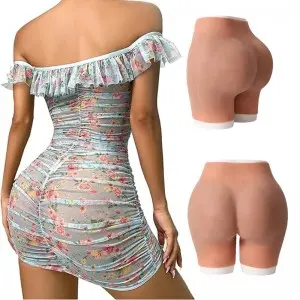
In beauty boutiques in Lagos, e-commerce livestreaming studios in Johannesburg, and fashion markets in Dakar, a once niche shaping product is quietly taking center stage—silicone buttock augmentations. In recent years, demand for silicone buttock augmentations in the African market has exploded, with more and more consumers, from street fashionistas to ordinary working women, including them in their beauty and shaping routines. This phenomenon is not accidental, but rather an inevitable result of the resurgence of local African aesthetic culture, the rise of the middle class, and product localization innovation.
Aesthetic Confidence Returns: Full-figured Aesthetics Fuels Rigid Demand
In the African aesthetic system, a full figure has always been a symbol of health, vitality, and charm. In Zulu traditional celebrations, a woman’s hip curves are seen as a manifestation of fertility and family fortune; the traditional clothing of the Yoruba people in West Africa, the “Agbada,” deliberately emphasizes the beauty of the hip contour through the combination of a loose outer robe and a tight inner garment. This aesthetic preference, rooted in cultural genes, has not faded in modern society; on the contrary, it has become even more pronounced with the rise of cultural confidence. In the past, African women relied heavily on the tailoring and design of traditional clothing to enhance their figures. The emergence of silicone buttock implants offers a more convenient and natural solution. Unlike the European and American markets that prioritize an “ultimately perky” look, African consumers prefer products that fit their local body types—wider base designs, multiple color options to suit darker skin tones, and silicone materials that mimic the feel of natural fat. These details precisely address local aesthetic concerns. Nigerian beauty blogger Amara stated in her TikTok video, “This isn’t an imitation of Western aesthetics, but rather a way to make our natural curves more radiant.” The video garnered over 500,000 likes, confirming the high degree of alignment between these products and local aesthetic culture.
Economic and Channel-Driven Growth: Enhanced Consumer Power and Accessibility
The explosive growth of silicone buttock implants is inseparable from the development of the African economy and the maturity of its consumer market. As Africa’s largest economy, Nigeria’s beauty and personal care market is projected to reach $10.17 billion by 2025, with young consumers aged 15-44 accounting for over 45%, and the middle class experiencing an annual growth rate of 8%. This demographic possesses stable purchasing power and is willing to pay for products that enhance their personal image. Silicone buttock implants, as a moderately priced shaping product (domestic retail price mostly between $30-$80), perfectly fit into their comfort zone.
The penetration of e-commerce channels has opened a crucial entry point for market growth. Africa has 646 million internet users, and TikTok Shop’s GMV in Nigeria has grown by over 150% annually, making live-streaming e-commerce a significant sales channel for beauty products. E-commerce platforms not only break down geographical barriers, allowing consumers in remote areas to easily purchase, but also lower the threshold for consumer decisions through content formats such as “amateur reviews” and “scenario-based demonstrations.” Data from the South African e-commerce platform Takealot shows that in 2024, searches for keywords related to “silicone shaping” increased by 320% year-on-year, with 60% of orders coming from non-core cities.
Meanwhile, the improvement of localized supply chains has further driven market expansion. Some companies, drawing on their experience in localizing hygiene product production, have reduced the production cost of silicone buttock implants to one-third of that of European and American brands, making their products more competitively priced. This combination of “high cost-effectiveness + precise fit” has transformed silicone buttock implants from a niche fashion item into a mainstream beauty consumer choice.
Product Innovation and Compliance: An Inevitable Path to Market Maturity
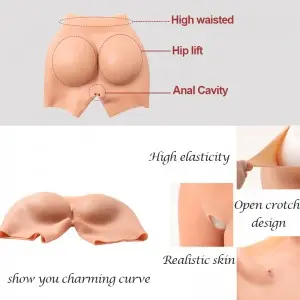
The overall upgrade of the African silicone market has provided technological support for buttock implant products. In recent years, the African silicone market has reached a scale of tens of billions of dollars. Material research and development focuses on safety and comfort, with high-temperature resistant and highly breathable medical-grade silicone being widely used in the personal care field. Addressing the hot climate of Africa, brands have also launched products with added ventilation holes, solving the problem of poor heat dissipation in traditional silicone products. Regarding color matching, mainstream brands have launched more than six skin tone options, covering shades from light brown to dark brown, meeting the needs of different groups.
As the market expands, compliance has become an important trend in industry development. Many African countries have established strict cosmetic regulatory systems. Cameroon, referencing the standards of the Economic Community of West African States (ECOWAS), has set stringent limits on the heavy metal content of cosmetics—lead ≤10ppm, mercury ≤1ppm—and the customs inspection rate has increased to 15%. This shift has forced brands to strengthen quality control, making CEEAC certification (Economic Community of Central African States certification) a crucial entry point into core markets. In 2024, 23 non-compliant silicone shaping brands were blacklisted, while compliant products leveraged their trust advantage to increase market share.
Future Outlook: From Shaping Needs to Value Upgrading of Self-Expression
The growth of the African silicone buttock prosthesis market is not a short-term boom, but a long-term trend driven by consumption upgrading and cultural awakening. In the future, with the application of 3D scanning technology in product customization, personalized silicone buttock prostheses will become a new growth point—products tailored to consumers’ body data can further improve fit and naturalness. Simultaneously, the rise in male shaping demand will open up new markets. South African market research shows that sales of male silicone shaping products increased by 95% year-on-year in 2024, exhibiting a “gender-neutral” consumption characteristic.
More importantly, these products are transcending their simple “shaping tool” attributes, becoming a vehicle for African women’s self-expression. In an era of rising awareness of gender equality, the popularity of silicone buttock implants essentially reflects women’s pursuit of “self-defined beauty”—not being bound by a single aesthetic standard, but using technology to take control of their own image. As Kenyan women’s rights activist Wanjiru said, “The power to choose beauty is in our own hands, and that’s the true vitality of this market.”
Post time: Dec-12-2025