
Elastic Recovery and Wash Durability Testing for Intimate Apparel: A B2B QA Guide
For lingerie brands, apparel importers, and e-commerce sellers, the difference between a five-star repeat purchase and a one-star return often comes down to one invisible property: how well the garment returns to its original shape after being stretched and washed. Elastic recovery and wash durability are not laboratory curiosities. They are the engineering backbone of customer-perceived quality, and they are measurable long before a single unit reaches a distribution center. This guide gives QA managers and buying teams a practical framework for specifying, testing, and accepting intimate apparel built around seamless underwear, bras, silicone nipple covers, and silicone bras.
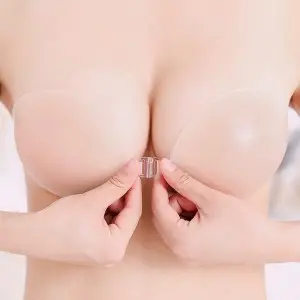
Why Elastic Recovery Defines the Lifetime Value of Intimate Apparel
Intimate apparel lives under constant mechanical stress. A bra underband is stretched and released dozens of times per wear. Seamless underwear is pulled, twisted, and tugged during dressing. Silicone products rely on tack adhesion that must survive skin oil, sweat, and repeated application. When recovery fails, the garment rides up, gaps open, and support collapses. In a B2B context, that translates directly into return rates of 8% to 18% on poorly specified programs versus 2% to 4% on programs with enforced elastic-recovery limits.
The good news is that recovery is quantifiable. By agreeing on test methods and acceptance thresholds with your manufacturer before bulk production, you convert a subjective “feels loose” complaint into a numeric, enforceable specification. That single step is what separates a mature sourcing program from a reactive one.
Tip: Always lock elastic-recovery and wash-durability limits into the purchase contract before bulk, not after a return spike appears.
Fabric Elastic Recovery Rate: Test Method and Acceptance Thresholds
Elastic recovery rate is the percentage of original length a fabric regains after being held at a defined extension and released. It is the single most informative number you can request from a mill.
Standard Test Methods
The three methods most relevant to intimate apparel buyers are:
- ASTM D2594 – Standard test for stretch properties of knitted fabrics, widely used for seamless and circular-knit bodies.
- ISO 14704 – Determination of stretch and recovery of woven fabrics using the strip method, useful for structured bra wings.
- FZ/T 70006 – Chinese textile industry method for knitted fabric elasticity, common among Yiwu and Guangdong seamless suppliers.
A typical procedure fixes a 100 mm marked gauge length, extends the specimen to 50% or 80% strain at 300 mm/min, holds for 60 seconds, releases, and measures recovery after a 60-second relaxation. Recovery is reported as a percentage of the original gauge length.
Acceptance Thresholds by Product Tier
We recommend a three-tier band so buyers can match limits to price point and brand promise:
- Entry tier: recovery ≥ 82% at 50% extension. Acceptable for promotional multipacks where price drives the decision.
- Standard tier: recovery ≥ 88% at 50% extension, ≥ 85% at 80% extension. The baseline for most private-label seamless lines.
- Premium tier: recovery ≥ 92% at 50% extension, ≥ 89% at 80% extension. Expected for shaping and support positioning.
Below 80% recovery at 50% extension, garments typically show visible waviness at the waistband within five to eight wears. Treat anything under that as a reject-level specification failure for branded programs.
Dimensional Change and Slack After Repeated Washing
Recovery rate tells you about a single stretch event. Wash durability tells you about the product’s whole life. The two are related but not identical: a fabric can recover well once yet creep and slack after thermal and mechanical laundering cycles.
Use ISO 6330 (domestic washing and drying) or AATCC 135 (US domestic laundering) as the reference. A standard protocol is 20 machine wash cycles at 40°C followed by line dry, then measurement of length, width, and waistband-relaxed circumference against the pre-wash marker.
- Length change after 20 washes: acceptable ≤ ±5%; premium ≤ ±3%.
- Width change after 20 washes: acceptable ≤ ±5%; premium ≤ ±3%.
- Waistband relaxed growth: acceptable ≤ +6%; premium ≤ +3%.
- Surface curl or waviness at hems: none visible at 30 cm inspection distance for premium, minor acceptable for entry.
The metric buyers most often overlook is residual slack growth in the underband. Even when the main body holds dimension, a +5% to +8% underband creep after 15 washes is the leading cause of “the bra feels bigger now” returns. Capture it with a relaxed-circumference measurement, not just a stretched one.
Spandex (Elastane) Content and Recovery Life: The Engineering Trade-off
Spandex, also called elastane, is the recoverable engine inside almost every seamless underwear and bra wing. But more is not always better, and less is almost always worse.
- Below 5% spandex: recovery is poor; fabrics bag within two to three wears. Avoid for any support product.
- 8% to 12% spandex: the workhorse range for everyday seamless panties and light bralettes, balancing recovery and cost.
- 15% to 20% spandex: high-stretch shaping and sports-intimate zones where strong return force is required.
- Above 22% spandex: diminishing returns, higher fiber cost, and a firmer handfeel that some consumers read as “tight.”
Recovery life correlates with total elastane mass and its denier, not merely percentage. A 20-denier spandex at 12% often outlasts a 40-denier spandex at the same percentage because finer filament distributes stress more evenly. In our QA experience, programs specifying 15% to 18% fine-denier spandex in the underband zone deliver the best wash-to-wear consistency across a 40-wash simulated life.
Note that chlorine, high-temperature drying above 60°C, and fabric softeners accelerate spandex degradation. Care-label alignment with the tested protocol is therefore part of the specification, not an afterthought.
Strap and Underband Elastic Fatigue Testing
Straps and underbands carry the highest cyclic load in a bra system, so they deserve a dedicated fatigue protocol rather than a single recovery measurement.
Strap Elastic Fatigue
Cut a strap segment, mount it in a tensile cycler, and apply a load equal to 1.5 times the intended worn tension for 5,000 to 10,000 cycles at 30 to 60 cycles per minute. Measure residual extension after the final cycle.
- Pass: residual permanent extension ≤ 8% of original length after 5,000 cycles.
- Premium pass: residual permanent extension ≤ 5% after 10,000 cycles.
- Fail: visible narrowing, snapping, or > 12% permanent stretch.
Underband Elastic Fatigue
The underband is the primary support structure. A relevant test stretches the band to 1.3 times its relaxed circumference, holds, releases, and repeats 3,000 to 5,000 cycles. Record both recovery percentage and any elastic yarn breakage or delamination at the stitch line.
- Pass: recovery ≥ 85% and no yarn breakage after 3,000 cycles.
- Premium pass: recovery ≥ 90% and no delamination after 5,000 cycles.
For silicone bras that rely on an elastic rim rather than straps, apply the same cyclic protocol to the rim and report permanent set, since rim slack destroys the sealing contact.
Silicone Products: Adhesion Decay and Sweat-Aging Testing
Silicone nipple covers and silicone bras are a different failure mode entirely. There is no fabric recovery to measure; instead the quality question is tack retention, or how well the medical-grade adhesive layer keeps its grip across wears and against body fluids.
Initial Adhesion and Peel Strength
Measure initial peel strength on a standardized substrate (often skin-simulant silicone or treated glass) using a 180-degree peel at 300 mm/min. Typical acceptable starting values:
- Reusable silicone covers: initial peel ≥ 1.5 N/cm, designed for 15 to 30 wears depending on skin prep.
- Disposable adhesive covers: initial peel ≥ 2.0 N/cm for single or limited use.
Sweat-Aging and Sebum Exposure
Artificial sweat per ISO 3160-2 or a simulated sebum mixture is applied, the product is aged at 37°C for 4 to 8 hours, then re-tested. This simulates a long wear day. Key acceptance points:
- After 8-hour sweat aging, peel strength should remain ≥ 70% of initial for reusable grades.
- After 8-hour sweat aging, peel strength should remain ≥ 80% of initial for disposable grades.
- Visible tack loss, edge curl, or transfer of silicone oil to the substrate is a reject.
Buyers should also request a multi-wear reuse curve: peel strength at wear 1, wear 10, and wear 25 for reusable products. A healthy curve holds above 1.0 N/cm through the rated wear count. Products that drop below 0.8 N/cm before the claimed wear count will generate “fell off” complaints.
Laboratory Submission Checklist and Pass/Fail Criteria
The fastest way to make this operational is a single submission sheet you send with every bulk fabric and finished-goods lot. Below is a checklist we recommend for intimate apparel programs.
- Fabric elastic recovery: ASTM D2594 or ISO 14704, report at 50% and 80% extension, with tier threshold.
- Wash durability: ISO 6330 or AATCC 135, 20 cycles at 40°C, report length, width, and underband growth.
- Spandex content verification: burn test or FTIR plus lab-dip fiber analysis, confirm declared percentage within ±1%.
- Strap fatigue: 5,000-cycle cycler test, report permanent extension and breakage.
- Underband fatigue: 3,000 to 5,000-cycle test, report recovery and delamination.
- Silicone peel strength: initial and post-8h sweat aging, report N/cm and reuse curve.
- Care-label alignment: confirm tested wash protocol matches the printed care label.
- Colorfastness to perspiration: ISO 105-E04, grade ≥ 4 to avoid bleeding onto skin.
A practical pass/fail rule: a lot fails if any single critical parameter (recovery, underband growth, strap breakage, silicone peel retention) is outside its tier limit, even if everything else passes. Elastic and adhesion defects are systemic, not cosmetic, so one bad metric predicts field failures.
Building a Practical Incoming-QC Protocol for Buyers
You do not need a full in-house lab to protect your brand. A tiered approach keeps cost sane while catching the failures that matter.
- Tier 1, every lot: visual inspection, care-label check, and a simplified stretch-and-release hand check on 5 units per 500 pieces.
- Tier 2, quarterly or per color: third-party lab run of recovery, wash durability, and silicone peel on retained submission samples.
- Tier 3, new supplier or new fabric: full fatigue and sweat-aging battery before first bulk order.
Keep a retained sample of every bulk lot for at least one reorder cycle. When a return spike appears, the retained sample lets you reproduce the test and prove whether the defect is material, process, or handling related. Over a year, teams using this structure typically cut intimate-apparel return-related costs by 30% to 50% compared with inspection-by-eye alone.
FAQ
What elastic recovery rate should I specify for private-label seamless underwear?
For a standard private-label line, require ≥ 88% recovery at 50% extension and ≥ 85% at 80% extension. Move to ≥ 92% at 50% extension for premium or shaping claims. Anything under 80% at 50% extension should be rejected for branded programs.
How many wash cycles are enough to predict real-world durability?
Twenty cycles at 40°C under ISO 6330 is the industry baseline and roughly equates to two to three months of typical use. For premium programs, extend to 40 cycles and track the slope of dimensional change rather than a single endpoint.
Does higher spandex percentage always mean better recovery?
No. Recovery depends on both spandex percentage and denier distribution. An 8% to 12% fine-denier spandex often outperforms a poorly distributed 20% coarse spandex. Specify both the percentage range and the intended denier for critical zones like the underband.
How do I test silicone nipple cover adhesion without a lab?
You can run a basic wear-count log: apply and remove the cover on a standardized skin area, recording hold time and any slip per wear up to the claimed count. For numeric proof, send samples for 180-degree peel and 8-hour sweat-aging tests to a third-party lab; require ≥ 70% peel retention for reusable grades.
What is the single most predictive test for bra return reduction?
The underband relaxed-circumference measurement after wash and fatigue testing. Underband creep of more than +5% post-wash is the strongest statistical predictor of “fits bigger now” returns, stronger even than fabric recovery alone.
Should care labels reflect the tested wash protocol?
Yes. If you test at 40°C line dry but the label says 60°C tumble dry, you have no contractual basis to reject a slack batch, because the product was used outside its validated window. Align label and test protocol before bulk.
Related Pages
- Different Types of Silicone Nipple Covers Explained for Buyers
- What Is a Silicone Nipple Cover? A Guide for Wholesale Buyers
- Why Private Label Silicone Nipple Covers Are a Profitable Opportunity
- Top Reasons Retailers Should Add Silicone Nipple Covers to Their Portfolio
Post time: Sep-21-2026