
Introduction
For international procurement managers, category buyers, and e-commerce brand founders, understanding the manufacturing process of premium silicone muscle suits is critical to evaluating supplier capability, assessing product lifespans, and justifying retail pricing.
The production of high-end wearable silicone prosthetics is a precise blend of industrial chemistry, advanced ergonomics, and artisanal hand-craftsmanship. Below is a comprehensive, step-by-step B2B technical overview of how professional liquid silicone injection factories manufacture high-tensile, realistic muscle suits for the global retail market.
1. 3D Digital Sculpting & Ergonomic Design
The process begins in the digital design studio. Industrial sculptors use advanced 3D software (such as ZBrush) to model the muscular anatomy.
-
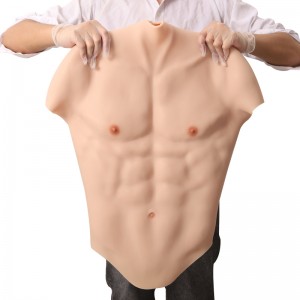
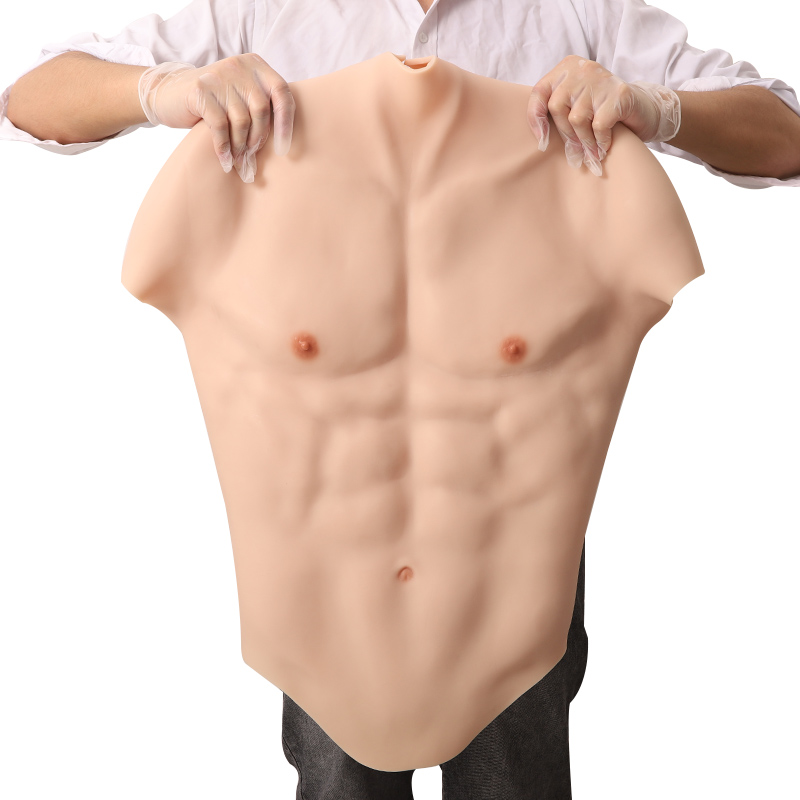
Anatomical Accuracy: Designers map out exact muscle fiber directions, vascular positioning (veins), and realistic skin pores.
-
Ergonomic Grading: For global markets (North America, Europe, Middle East), sizing algorithms grade the digital models across varying height and weight ranges. The interior is designed to fit snugly against human anatomy, allowing for natural movement and respiration.
2. High-Precision Master Mold Production
Once the digital model is finalized, it is converted into a physical mold. The choice of mold material directly dictates the surface quality of the mass-produced silicone.
-
CNC Milling / 3D Printing: Industrial CNC machines mill the negative and positive halves of the mold from high-grade aluminum blocks, or durable resin compounds via industrial SLA 3D printing.
-
Surface Texturing: The mold surfaces undergo micro-texturing to ensure that the finished product does not have a “plasticky” sheen, but rather a realistic, human-like matte texture.
3. Raw Material Selection & Chemical Formulation
Premium factories do not use cheap Thermoplastic Elastomers (TPE). Instead, they utilize multi-component Platinum-Cured Liquid Silicone Rubber (LSR).
-
Platinum vs. Tin-Cure: Platinum-cured silicone is highly preferred by global retail chains because it is completely non-toxic, skin-safe, odorless, and food/medical-grade (compliant with FDA and REACH regulations). It does not leak oil or degrade over time.
-
Durometer Adjustments: The Shore A hardness (durometer) is carefully calibrated (typically between Shore A 0 to 5) to replicate the natural compressibility of human muscle and tissue.
4. Vacuum De-Airing & Color Pigmentation
Before injection, raw silicone components are mixed with specific liquid pigments to create multi-ethnic base skin tones (Caucasian, Latino, Asian, Afro-American).
-
Vacuum Chamber Processing: Liquid silicone naturally traps air during mixing. To prevent catastrophic structural defects (such as internal air bubbles that cause tearing during retail use), the mixture is placed in a high-pressure vacuum chamber to completely de-air and degas the liquid blend.
5. Liquid Injection Molding & Curing
The degassed liquid silicone is pumped into the closed, clamped aluminum/resin master mold under calculated pressure.
-
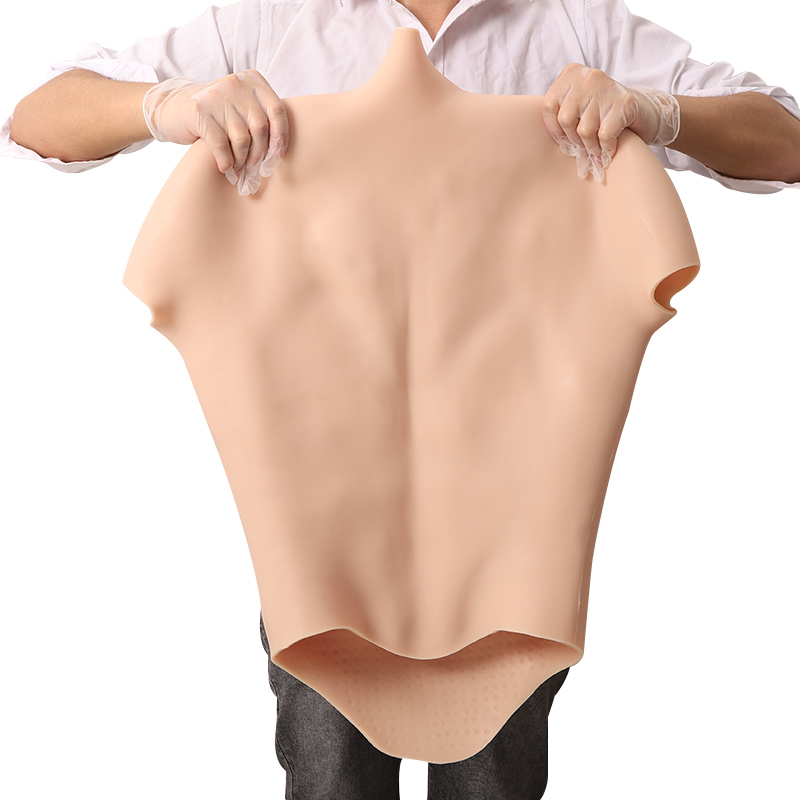
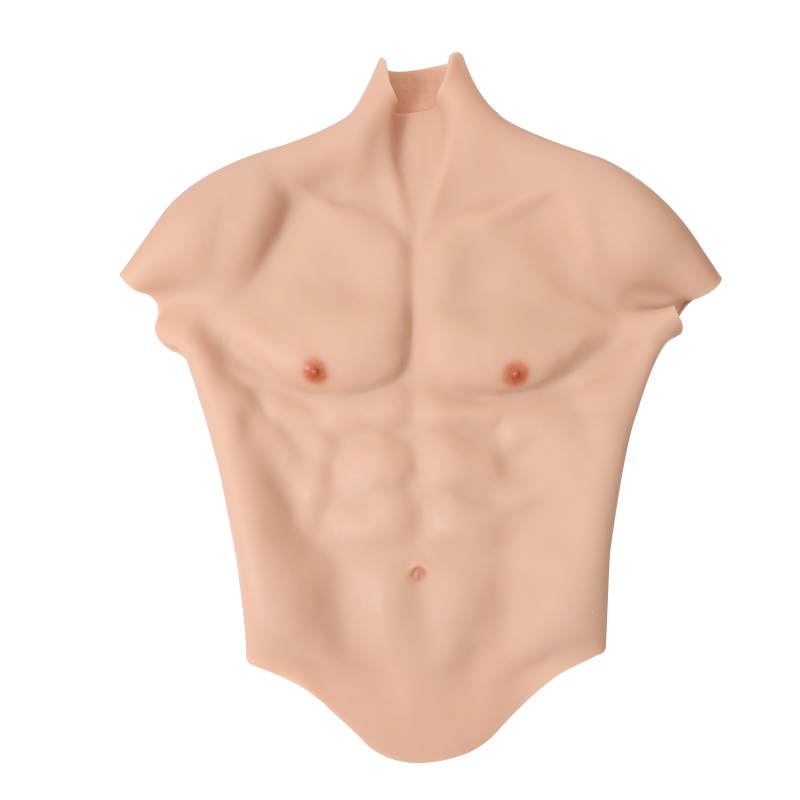
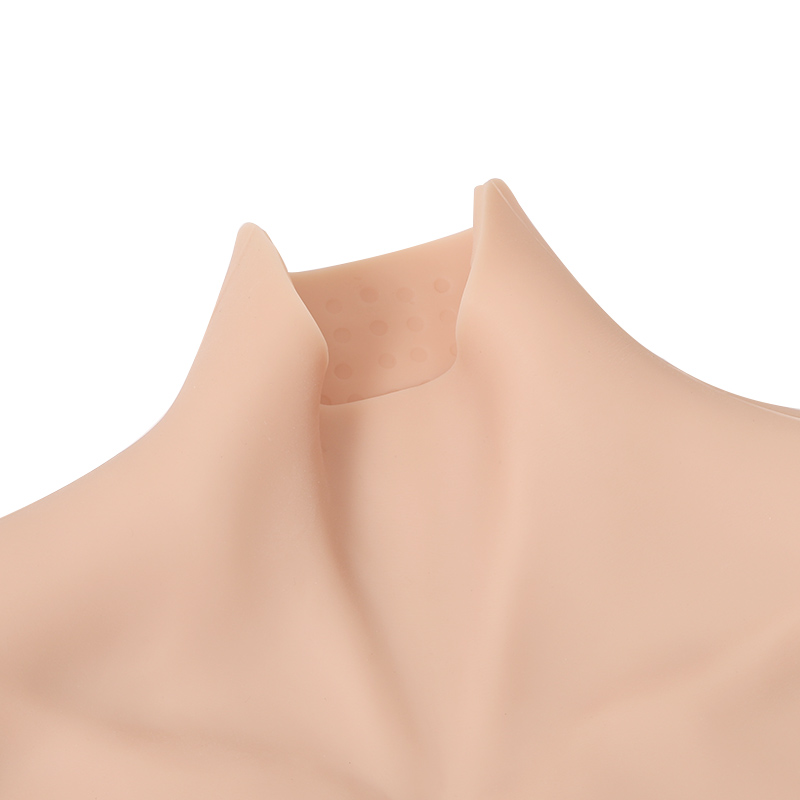
Floating-Point Matrix Construction: Advanced factories use internal molds that create raised “floating points” or micro-channels on the inside of the suit. This feature prevents the suit from vacuum-sticking to the end-user’s skin and enhances air-flow/breathability.
-
Thermal Curing: The mold is subjected to controlled heating profiles. The platinum catalyst triggers cross-linking polymer chain formation, solidifying the liquid into a highly elastic rubber structure.
6. Demolding & Edge-Vanishing Treatment
Once cured, the muscle suit is carefully extracted from the mold. This is a critical stage where the product’s edges are perfected.
Conclusion
-
Flash Trimming: Excess silicone material along the mold parting lines is trimmed by hand.
-
Tapered Edge Craftsmanship: The neck, arm, and leg openings are meticulously ground down to a thickness of less than 1mm. This creates a “feathered” edge, allowing the suit to blend invisibly with the wearer’s real skin.
- By sourcing from a manufacturer that strictly adheres to this structured, platinum-cured injection methodology, wholesale buyers can dramatically minimize consumer return rates, completely eliminate skin allergy liability complaints, and build a highly profitable, sustainable private label brand.
Post time: Jun-01-2026