Customized Shapewear Wholesale Guide
Driven by the global concepts of “body self-love” and the “self-indulgence economy,” the women’s shaping product market is experiencing continuous growth. The global shapewear market reached $2.3 billion in 2025 and is projected to climb to $4.2 billion by 2035, maintaining a stable compound annual growth rate of 6.2%. Silicone breast pads, hip pads, and shapewear are core categories, making customized wholesale a key avenue for global market expansion. This guide will provide global shapewear wholesalers with professional and practical strategies from core dimensions such as market trends, product selection, customization models, quality control, and supply chain cooperation. This will help them accurately connect with the supply chain and create a shaping product system that meets the needs of regional markets.
I. Understanding Global Market Trends: The Core Logic of Product Selection
Global shaping product consumption has shifted from “ultimate slimming” to “comfortable shaping,” with Smoothing > Slimming becoming the mainstream demand. Consumers are increasingly using shapewear as a “second skin” for various scenarios such as daily commutes, yoga, and pregnancy/postpartum, rather than simply as a shaping tool. This trend directly determines the product selection direction for customized wholesale, requiring a focus on three key points:
Focusing on Core Essential Needs: Silicone breast pads, seamless hip pads, high-waisted shaping pants, and seamless shapewear are universal essentials in the global market. Among these, silicone shaping accessories are particularly in demand in markets such as Europe, America, and Southeast Asia due to their high fit and excellent invisibility. High-waisted, tummy-control, and hip-lifting one-piece shapewear is suitable for everyday wear and has become a core category for wholesale.
Accommodating Diverse Body Types: The market gap for plus-size shaping products continues to expand. Demand for XXL and larger sizes of shapewear and hip pads is surging in markets such as Europe, America, and Australia. Ignoring the plus-size market will result in missing out on an important consumer group. Custom designs should incorporate a multi-size system to accommodate different body types.
Material comfort and safety are paramount: Global consumers have significantly increased their demands for the safety and breathability of shaping products. Food-grade silicone, highly elastic and breathable mesh, and seamless spandex fabrics have become mainstream choices. These materials not only meet environmental standards in Europe and the United States but also address the pain points of traditional shapewear, such as constriction, stuffiness, and chafing.
Meanwhile, the differentiated needs of regional markets require close attention: The European and American markets favor simple designs, larger sizes, and highly elastic shapewear, emphasizing invisibility and wearing comfort; the Southeast Asian market prefers bright colors and lightweight shapewear, with smaller accessories such as silicone breast pads and mini hip pads selling better; the Middle Eastern market has a greater demand for shapewear with high coverage and high support, and the fabric must balance breathability and durability.
II. Key Points for Core Product Customization: Key Standards for Silicone Shaping Accessories and Shapewear
The core competitiveness of custom-made shapewear wholesale lies in the meticulous control of product details, especially silicone accessories such as silicone breast pads and hip pads. The structural design of the shapewear directly determines the market acceptance of the product. The following are the core customization standards for different categories:
(I) Silicone Shaping Accessories (Breast Pads, Hip Pads)
Silicone accessories are a core sub-category of shaping products. Their materials and processes directly affect the user experience. Customization must adhere to four core standards:
Food-Grade Material Selection:Prioritize FDA food-grade addition-cure silicone. This material is environmentally friendly, non-toxic, odorless, and non-irritating to the skin. It also possesses good resilience and tear resistance, meeting the safety certification requirements of major global markets.
Select Silicone of Different Hardnesses Based on Needs:** Breast pads are suitable for low-hardness soft silicone to improve fit, while hip pads are suitable for medium-to-high hardness silicone to ensure shaping support. The manufacturing process emphasizes seamlessness and a perfect fit: silicone breast pads require a seamless molding process with thinned edges to prevent marks during wear; the hip pads are ergonomically designed to conform to the curves of the buttocks, and feature a breathable, non-slip layer to prevent shifting.
Sizes are adaptable to various scenarios: breast pads are available in different sizes (from A cup to E cup and above) to meet the needs of different breast shapes; hip pads are available in natural and reinforced versions to suit different shaping needs for everyday wear and special occasions.
Additional features enhance competitiveness: customizable waterproof, sweatproof, and reusable silicone breast pads, packaged in individually sealed packaging, increase product value and meet the convenience needs of global consumers.
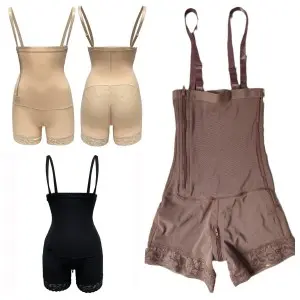
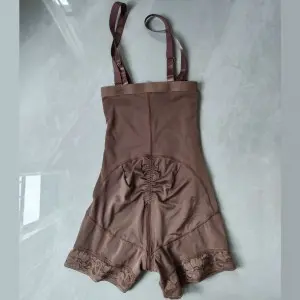
(II) Shapewear (High-waisted Shapewear Pants, Seamless Shapewear, Shapewear Bodysuits)
The core of custom-made shapewear lies in structural design, fabric selection, and sizing, balancing shaping effect with wearing comfort. Key points are as follows:
Fabric Combination:** Combining elasticity and breathability: Using a composite fabric of “high-elastic spandex + breathable mesh + skin-friendly cotton base,” double-layer compression design can be added to the waist and abdomen to enhance the tummy-flattening effect. Breathable mesh is used in the sides and hips to ensure air circulation. Seamless knit shapewear conforms better to the body, without seam marks, and is the mainstream choice in the global market.
Ergonomic Structural Design:The waistline of high-waisted shapewear pants should be designed 3-5cm above the navel, effectively flattening the abdomen without compressing internal organs. The hip-lifting area uses 3D three-dimensional tailoring to lift the hip curve upwards. Shapewear bodysuits require adjustable shoulder straps to accommodate different heights, and an open crotch design enhances ease of use.
Size System Covering All Body Types: Breaking away from the traditional S-XL size limitations, a customized full-size system from XS to 4XL is available. The fit is optimized for plus-size individuals, with wider side waist and hip areas to avoid a constricting feeling, aligning with the global consumer philosophy of “body inclusivity.”
Detailed Design Enhancements: Seamless rolled edges at the hem and cuffs prevent curling; anti-slip strips at the waist prevent the shapewear from slipping down; and a wire-free, boneless design reduces pressure on the body.
III. Customized Cooperation Models: OEM/ODM Selection and Practical Process
The core cooperation models for customized shapewear wholesale are OEM (Original Equipment Manufacturer) and ODM (Original Design Manufacturer). These two models cater to different procurement needs and require precise selection based on brand resources and design capabilities. The core differences and practical processes are as follows:
(I) OEM Model: Production Based on Drawings, Control of Core Design
Core Definition: The buyer provides a complete product design scheme (including drawings, material standards, pattern requirements, logo placement, etc.). The manufacturer is only responsible for production, assembly, and packaging according to the requirements. The product brand belongs to the buyer.
Suitable Groups: Buyers with their own design teams, clear brand positioning, and market research capabilities. Suitable for brands that want to create differentiated products and control core design.
Core Advantages: Unique product design that accurately matches brand positioning and regional market needs, avoiding homogeneous competition. Practical Process: Design Proposal Delivery → Manufacturer Prototyping → Sample Confirmation and Modification → Signing of Cooperation Contract → Deposit Payment → Mass Production → Quality Acceptance → Final Payment → Packing and Shipping.
(II) ODM Model: Private Label Customization, Rapid Product Launch
Core Definition: The manufacturer develops a standardized product solution library in advance. The buyer selects a solution according to their own needs and can make minor adjustments (such as color, logo, fabric material). After the manufacturer completes production, it affixes the buyer’s brand logo.
Suitable for: Buyers without their own design team who want to quickly enter the market, or those newly entering the shaping product market. Suitable for wholesale purchases seeking high efficiency and low cost.
Core Advantages: Eliminates the design and development stage, shortens the product launch cycle, the manufacturer has mature patterns and processes, ensuring product quality, and allows for flexible adjustments to details while also considering brand personalization.
Practical Process: Manufacturer provides product design library → Buyer selects style and requests minor adjustments → Manufacturer makes samples → Sample confirmation → Sign cooperation contract → Pay deposit → Mass production → OEM packaging → Quality acceptance → Pay final payment → Packaging and shipment.
(III) Key Considerations for Cooperation
Clarify Design Ownership: Under the ODM model, if the buyer wishes to exclusively own a product design, a design buyout agreement must be signed with the manufacturer to prevent the manufacturer from selling the same design to other clients.
Detailed Contract Terms:The contract must clearly specify core content such as material standards, production cycle, minimum order quantity (MOQ), quality acceptance standards, and after-sales guarantees to avoid subsequent disputes.
Confirm Sample Details:Before mass production, it is essential to confirm the sample’s pattern, material, workmanship, size, and other details. Request the manufacturer to provide samples of different sizes for trying on to ensure they meet requirements.
IV. Quality Control and Certification: The Foundation for Global Market Access
As a product worn in close contact with the skin, shapewear’s quality and safety certifications are core thresholds for entering the global market, especially in markets like Europe, America, Australia, and Japan, which have strict requirements for environmental and safety standards. Customized wholesale processes require comprehensive quality control from production to acceptance, and certification must be obtained for the corresponding market.
(I) Key Points of Full-Process Quality Control
Raw Material Inspection: Require manufacturers to provide test reports for raw materials such as silicone and fabrics, confirming that the materials meet food-grade and environmental standards and are free of harmful chemicals.
Production Process Monitoring: Require manufacturers to provide real-time feedback on the production process, focusing on monitoring core processes such as silicone molding, fabric cutting, and sewing to avoid problems such as rough workmanship, seam opening, and silicone peeling.
Finished Product Acceptance Standards: Develop clear finished product acceptance rules, including fit testing, elasticity testing, washability testing, and silicone adhesion testing. The sampling acceptance rate should be no less than 3%, and unqualified products must be reworked by the manufacturer.
(II) Core Market Certification Requirements
European and American Markets: OEKO-TEX Standard 100 certification (environmental certification for textiles) is required; silicone products must be FDA certified (US Food and Drug Administration certification).
Australian Market: Compliance with Australian AS/NZS 4332:2017 textile safety standards is required; silicone products must be TGA certified (Australian Therapeutic Goods Administration certification).
Japanese Market: JIS L 1096 textile quality certification is required, emphasizing odorlessness and skin-friendliness.
Completing certifications for the corresponding markets in advance can effectively avoid customs inspection risks upon product entry and enhance brand trust in the local market.
V. Core Considerations for Supply Chain Cooperation: Low MOQ, Flexible Delivery, and Long-Term Win-Win
Supply chain cooperation in the custom shapewear wholesale industry directly impacts procurement efficiency and costs, especially for small and medium-sized buyers who have high requirements for flexibility in minimum order quantity (MOQ), delivery cycle, and shipping methods. When selecting a manufacturer, four core factors should be considered:
Low MOQ for Flexible Procurement: Prioritize manufacturers that support low MOQs, especially for silicone accessories and niche-sized shapewear. Low MOQ reduces procurement costs and inventory risk, suitable for trial markets and small-batch replenishment.
Flexible Delivery and Warehousing: Manufacturers should have flexible shipping capabilities, supporting mixed wholesale orders and partial deliveries, while also providing short-term warehousing services to meet the buyer’s need to adjust delivery schedules according to market sales.
Mature OEM/ODM Experience: Choose manufacturers with years of experience in shaping product manufacturing and global market supply capabilities. These manufacturers are familiar with the needs and standards of different regional markets, can quickly respond to customization requests, and have more comprehensive quality control systems.
Comprehensive after-sales support: Clearly define the manufacturer’s after-sales guarantee terms, including policies for reworking and exchanging defective products, and the division of responsibility in case of product quality issues, to avoid disputes in future cooperation.
Long-term supply chain cooperation is key to reducing procurement costs and improving product stability. It is recommended to establish a deep cooperative relationship with manufacturers, jointly participate in product iteration and upgrades, and optimize patterns, materials, and designs based on market feedback to achieve a win-win situation.
Post time: Mar-02-2026