
Silicone Reborn Baby Dolls Wholesale: A Buyer’s Sourcing Guide
Silicone reborn baby dolls have grown from a niche hobby into a global collectible category. For collectible-doll retailers, hobby shops, and e-commerce sellers, wholesale sourcing here is very different from buying ordinary toys: material grades, sculpt exclusivity, paint work, and labeling rules all affect margin and repeat sales. This guide covers key decisions when evaluating silicone reborn baby doll suppliers.
What Reborn Dolls Are and Why Collectors Pay Premium Prices
Reborn dolls are hyper-realistic baby dolls designed to look and feel like real infants, with veining, mottling, blushing, soft weight, and sometimes rooted hair. The core buyers are adult collectors, doll artists, and gift shoppers — not children. Collectors pay premium prices for full-body silicone, and limited sculpts from recognized artists trade at a markup on the secondary market.
For B2B buyers, reborn dolls are collectibles with artistic value, closer to art pieces than mass toys. Retail channels include collector forums, doll conventions, craft marketplaces, and dedicated e-commerce stores. Because the category rewards realism, suppliers who control the full chain — sculpting, molding, painting, finishing — deliver better batch-to-batch consistency than trading companies assembling parts from scattered workshops.
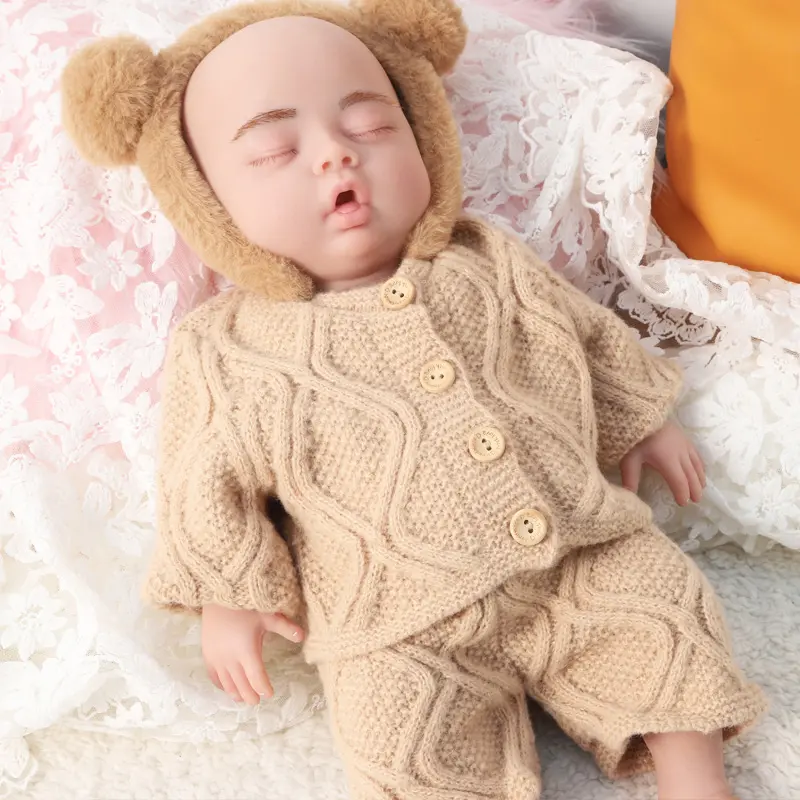
Full-Body Silicone vs Vinyl Head + Cloth Body
The first product decision is body construction; it drives both price and target customer:
- Full-body silicone: the entire doll is soft silicone, including arms, legs, and torso. This is the premium segment — posable, uniformly soft, and handling like a real infant, but with higher cost and shipping weight.
- Vinyl head + cloth body: a detailed vinyl head (often rooted hair) on a weighted cloth body. This is the entry and mid segment — easier to ship, lower landed cost, and suited to gift shops and casual collectors.
- Silicone head + limbs with cloth or partial-silicone torso: a middle option balancing feel and cost.
Most programs carry both constructions: full-body silicone for the collector tier, vinyl-head versions for first-time buyers. Get the construction breakdown per SKU in writing, because “silicone doll” is often used loosely and can mean a silicone head only.
Platinum-Cure vs Tin-Cure Silicone Grades
The material grade is the most important technical specification for full-body silicone reborn dolls, and it explains most of the price spread between similar-looking products:
- Platinum-cure (addition-cure) silicone: cured with a platinum catalyst. Better skin-like softness, higher tear resistance, low shrinkage, no post-cure odor, and far better aging — the surface stays elastic instead of turning oily or brittle. It is the standard for premium collectible dolls, at higher cost.
- Tin-cure (condensation-cure) silicone: cured with a tin catalyst. Cheap and easy to work with, keeping entry-level pricing low, but it ages faster — losing elasticity, developing surface tackiness, and tearing more easily at thin limb edges.
Practical guidance: specify the cure system in writing per SKU, ask for shore hardness (reborn skin sits in a very soft range, with limb zones softer than the head), and request a sample for a tear and flex check before committing to volume. A supplier who cannot state the cure system clearly is a red flag. Build your collector tier around platinum-cure silicone, and position tin-cure pieces only as clearly-labeled budget lines.
Custom Sculpts: Sculpting and Mold Development
Exclusive sculpts are how retailers differentiate. A custom-sculpt project runs in five stages:
- Concept and reference: provide reference images, target size, and expression; the sculptor proposes a clay or digital sculpt.
- Sculpt approval: review photos or a 3D render — eyes, nose, lip and ear detail — before molding.
- Mold development: the approved sculpt is sectioned (head, torso, arms, legs) and cast into production molds. Mold quality determines seam placement and how well details survive across batches.
- First-article samples: check fit, seam lines, paintability, and articulation before mass production.
- Tooling ownership: agree in writing who owns the sculpt and molds, exclusivity terms, and mold retirement for your program.
Mold development also sets per-unit economics: a well-engineered mold yields hundreds of consistent pulls before degradation, while a rushed mold shows seam steps and detail loss by the second batch. For exclusive sculpts, negotiate mold ownership and a defective-pull rejection clause — this protects both quality and your design investment.
Hair and Paint: Rooting vs Painted Hair, and Paint Layering
Realism lives in the finish. Two processes dominate:
- Rooted hair: mohair or synthetic fiber rooted strand by strand (hand-rooted on premium pieces, machine-assisted at mid price points). It looks natural and allows styling, but adds significant labor cost.
- Painted hair: hair built up in translucent layers over the scalp. Durable, low-cost, and fine for vinyl-head budget lines, though it reads as painted up close.
Skin painting is layered: a base tone, then multiple translucent layers for mottling, blush, veining, and shading, sealed with a matte coat. Multi-layer translucent painting gives reborn skin depth; single-layer opaque paint looks flat and plastic. Ask how many paint layers a SKU carries and request close-ups of the forehead, cheeks, and limb creases — cheap single-layer paint shows there first. Also confirm the paint system suits flexible silicone, or adhesion failures will surface as flakes in the creases.
Size Ranges and Weight: Sizing the Realism
Reborn dolls are sold by size and weight, and both affect landed cost:
- Newborn (17–20 in / 43–50 cm): the classic collectible size — small enough for low-cost shipping, large enough to show detail.
- Infant (20–22 in / 50–55 cm): the most popular listing size — good presence for gifting, still shippable.
- Baby to young toddler (22–26 in and up): high visual impact for display and showrooms, but higher silicone consumption, weight, and freight.
Weight filling matters as much as size. Empty shells feel hollow, so quality pieces are weighted with glass beads or granulate in the limbs and torso for realistic infant heft. Specify target weight per size in your spec sheet — under-weighted dolls feel fake, while badly distributed filling causes floppy head posture, a common complaint.
Quality Control Checkpoints Before Shipment
Reborn dolls fail at predictable points, so build your inspection list around them:
- Seams: mold parting lines on the head, arms, and legs should be trimmed and smoothed, not ridged or sanded through.
- Paint adhesion: flex the creases of elbows, knees, and neck — paint should not crack, flake, or transfer.
- Limb and neck fit: limbs attach flush without gaps; the head holds a pose without flopping to one side.
- Weight filling: even distribution, no lumps, no shifting granulate noise, no leakage through seams.
- Surface: no tackiness, oiliness, or strong odor — a tell of low-grade tin silicone or under-cured material.
- Details: consistent veining, symmetric blush, rooted hair with no bald patches.
For container or large LCL orders, inspect production pieces from the actual batch, not golden samples. Batch drift in paint tone and silicone softness is common when workshops mix material lots, so a per-batch AQL check protects your marketplace ratings.
Tip: keep one untouched sample of each sculpt as a physical golden standard and compare every reorder batch against it under the same lighting — it is the fastest way to catch paint and material drift before your customers do.
Private Label and Packaging Options
Private label in this category covers several layers; decide which fits your brand:
- Branding basics: your logo on a belly plate, neck or back stamp, woven label on clothing, and the certificate-of-authenticity card collectors expect with limited pieces.
- Packaging: from simple PE bags to collector-grade boxes with molded inserts, foam cradle packing, and printed brand sleeves. Good packaging also protects rooted hair and paint in freight.
- Extras: pacifier, birth certificate, outfit, magnetic accessories, and care cards — strong levers for bundle pricing.
- MOQ structure: private labeling typically starts at modest per-SKU minimums with size mixing; packaging inserts carry separate printing MOQs from the dolls themselves.
Confirm artwork responsibility in writing: the workable arrangement is you supply print-ready logo files and the supplier manages labels, stamping, and box printing to your approved mock-up. Always approve a printed packaging proof before the full run — color shifts on collector boxes are a frequent rework trigger.

Compliance Basics: Reborn Dolls Are Collectibles, Not Children’s Toys
This is where new sellers most often trip up. Realistic collectible reborn dolls are typically sold as adult collectibles, not children’s toys, which changes the compliance picture:
- Product positioning and labeling: how you may describe and label the product depends on the target market; collectible dolls are usually sold with explicit adult-collector labeling rather than age-graded toy markings. Exact requirements are subject to the latest standard text and official notices.
- Toy-safety trigger: if a doll is marketed, labeled, or reasonably perceived as a children’s toy, toy-safety frameworks (mechanical, flammability, chemical limits) can apply depending on the destination market, subject to the latest standard text and official notices.
- Materials documentation: keep supplier records of silicone grade, paints, and fillings on file; marketplace and customs queries about materials are routine here.
- Channel rules: marketplaces and payment providers set their own policies for realistic collectible dolls; policies differ by platform and change over time, so verify current policy before launching.
Do not print or claim certification marks you have not verified for the specific SKU and market; answer certification questions from the supplier’s documented test scope, and treat borderline points as subject to the latest standard text and official notices.
FAQ: Sourcing Silicone Reborn Baby Dolls
What is the realistic MOQ for wholesale reborn dolls?
Full-body silicone pieces are labor-intensive, so MOQs are usually set per sculpt and size — commonly modest per-SKU minimums with size mixing allowed. Custom sculpts add their own development MOQs on top of unit pricing.
How long does production take for a typical order?
Ready sculpts with rooted hair and multi-layer paint are the bottleneck; plan several weeks depending on quantity, plus a window for private-label printing and packaging. Custom sculpt programs add approval cycles at the sculpt, sample, and first-article stages, so build review windows into your calendar.
Can I get one exclusive sculpt and stop the supplier selling it elsewhere?
Yes, if it is contracted. Exclusivity, sculpt and mold ownership, and mold retirement terms should be written into the agreement before mold development starts. Without written exclusivity, a popular sculpt is likely to appear elsewhere.
How should reborn dolls be shipped?
Full-body silicone should travel with head and limb support and collector-grade box packing to protect rooted hair and paint. For LCL consolidation, specify inner-box strength and photograph batches at packing to simplify damage claims.
Related Pages
- Different Types of Silicone Nipple Covers Explained for Buyers
- What Is a Silicone Nipple Cover? A Guide for Wholesale Buyers
- Why Private Label Silicone Nipple Covers Are a Profitable Opportunity
- Top Reasons Retailers Should Add Silicone Nipple Covers to Their Portfolio
Post time: Nov-06-2026