
The Shapewear Market: A B2B Buying Window for Lingerie Brands
Shapewear has shifted from a corrective afterthought into a core category for modern lingerie and apparel brands. What used to be sold almost exclusively through specialty boutiques is now merchandised alongside everyday bras, briefs and loungewear, and it is increasingly featured in both the core line and the seasonal capsule of private label programs. For lingerie brands and importers, this creates a buying window that is relatively easy to enter compared with structured outerwear, because the underlying supply base, knitting platforms and trims are already mature across Asian manufacturing clusters.
From a B2B perspective, the appeal is straightforward. Shapewear carries a higher perceived value than basic briefs, supports a wider retail price ladder, and lends itself to repeat purchase as consumers buy for different outfits and occasions. A brand that already sources seamless underwear or silicone intimate products can extend into shapewear using the same factory relationships, the same fabric channels and the same quality systems, which keeps development cost and lead time under control. The real risk is underestimating how different shapewear development is from basic underwear development. Pressure, structure and fit tolerance matter far more than they do in a soft brief, and a sourcing team that treats shapewear like a tight pair of pants will ship a product that rolls, binds or loses compression after a few washes.
The most successful private label entries start with a narrow, well-specified range rather than a broad launch. A waist cincher, a high-waist brief and a bodysuit cover the majority of everyday demand, and each can be built on a shared platform of fabrics and trims. This keeps minimum order quantities manageable and lets the brand validate pressure preference and sizing before extending into plus sizes or fashion-led silhouettes. Buyers should also watch the occasion split. Everyday smoothing products demand all-day comfort and lower pressure, while event wear demands stronger sculpting and can tolerate a firmer hand feel. Specifying the intended occasion up front prevents the most common failure mode in shapewear sourcing, which is designing one product and hoping it serves every wearer.
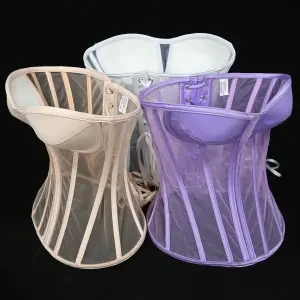
Compression Zoning: How High, Medium and Low Pressure Zones Sculpt the Body
Compression zoning is the single most important concept in shapewear design, and it is the area where private label programs either win or lose. The body is not a uniform cylinder, and effective shaping comes from applying different levels of pressure to different regions rather than squeezing the whole garment evenly. A well-engineered piece places firm control where the brand wants to reduce circumference, lighter support where the body needs to move or breathe, and graduated transitions so the wearer does not feel a hard line where one zone meets the next.
In practice, the waist and lower abdomen are the high-pressure zones. This is where most consumers want the most visible result, so the knitting structure, fabric weight and panel layout are concentrated here. The mid-pressure zones typically sit over the flanks, the upper thigh and the back, where the goal is smoothing rather than drastic reduction. The low-pressure zones are the ribs, the underbust area and the inner leg, where too much pressure causes discomfort, breathing restriction or chafing. The art of zoning is balancing these regions so the garment feels like a controlled hug rather than a vise.
Buyers should request a zone map from the factory during development. A simple schematic showing where high, medium and low pressure are applied tells the sourcing team far more than a single compression claim, because it reveals whether the supplier is engineering the garment or simply making it tight. The zone map should be tied to the actual knitting program, the placement of bonded panels and the location of any boning or silicone grip. When a factory cannot produce a zone map, that is usually a signal the product is being built generically, and the fit and comfort results will be inconsistent across size bands.
Expressing Compression Level: mmHg vs Fabric Weight and the Claims Boundary
One of the first questions a buyer asks is how to express compression strength, and the honest answer is that shapewear does not have a single universal standard the way medical compression hosiery does. Medical grade stockings are specified in millimeters of mercury, or mmHg, because they are regulated devices intended to manage circulation. Shapewear is a consumer apparel product, and most markets do not recognize an mmHg rating as a compliant claim for a non-medical garment.
That creates a claims boundary that private label brands must respect. Stating an mmHg value on shapewear packaging can imply a medical or therapeutic benefit, which invites regulatory scrutiny and, in some regions, requires device registration. The safer and more useful specification for a lingerie brand is fabric weight combined with a descriptive pressure tier. For example, a supplier can specify gram weight per square meter, the elastane percentage, the knitting structure and a tier label such as light, medium or firm. This communicates the product intent to the buyer and the factory without crossing into medical territory.
Some laboratories do measure shapewear pressure in mmHg during fit testing, and that data is valuable internally for comparing prototypes and tuning zones. The key distinction is that internal development data is not the same as a consumer claim. A brand can use mmHg numbers to choose between two samples, then express the chosen product to the market as a comfort or control level. Buyers should ask the factory how pressure is validated, whether it is measured on a mannequin or a live panel, and how the numbers map to the descriptive tiers used on the spec sheet. That discipline protects the brand if a competitor or regulator questions a claim, and it keeps the development conversation grounded in something measurable.
Fabric Selection: High-Stretch Nylon-Spandex, Mesh, Bonded Layers and Silicone Grip
Fabric is where shapewear performance is won or lost, and the starting point for almost every program is a high-stretch nylon-spandex or polyamide-elastane jersey. The elastane content typically sits in the mid to high teens by percentage, because the fabric must return to shape after repeated high stretch and must hold a sculpted line without bagging. A lower elastane count feels softer but loses compression faster, while an aggressive count can feel rubbery and trap heat. The right balance depends on the pressure tier and the intended wear duration.
Mesh is used strategically rather than across the whole garment. Open mesh panels reduce heat and weight over low-pressure zones such as the underbust or the side body, and they help the garment disappear under clothing. Bonded layers, where two fabrics are joined without stitches, create firm control panels without the bulk of a doubled seam, and they are common in waist and abdomen zones. The trade-off is breathability and care; bonded panels need careful washing guidance because heat and folding can delaminate the adhesive over time.
The silicone grip strips are a small component with an outsized effect on satisfaction. A thin silicone band at the leg opening and sometimes the waist prevents the garment from rolling down, which is the complaint that most often drives returns. The grip must be soft, evenly applied and durable through washing, because a strip that peels or cracks is a visible defect. Buyers should specify the width, the application method and the wash cycle the strip must survive, and they should confirm the factory uses a grade of silicone suited to skin contact rather than a generic craft adhesive.
Construction and Seamless Forming: Boning Choices for Shapewear
Shapewear can be built as cut-and-sew, as seamless knitted garments, or as a hybrid of both, and the choice changes the cost, the hand feel and the level of control. Seamless knitting is attractive because it removes side seams that can dig in, and it lets the factory vary stitch density across the body to create compression zoning in a single piece. That is why many shapewear programs begin on a circular or warp knitting platform already used for seamless underwear.
Where firmer structure is needed, boning is added. Boning is the rigid or semi-rigid element that holds a straight line along the side body or center, and it prevents the garment from collapsing or rolling at the edges. There are several options. Soft plastic or spiral boning is flexible and comfortable for everyday wear. Rigid synthetic stays give a stronger architectural line for firm control pieces but reduce comfort. Some programs use bonded power mesh in place of traditional boning to get structure without a hard element. The selection should follow the pressure tier: firmer products earn true boning, lighter products are better served by bonded panels that the wearer will tolerate for a full day.
Buyers should ask where boning is placed, how it is anchored at the ends, and whether the channels are enclosed so the boning cannot poke through. A common defect is boning that migrates or punctures the fabric after washing, and that is almost always a construction tolerance issue rather than a material failure. Reviewing the boning channel method during the prototype stage is far cheaper than recalling finished goods, and it should be documented in the development file alongside the zone map and the fabric specification.
Shapewear Size Systems: Pressure Consistency Across Size Bands
Shapewear sizing is frequently confused with regular underwear grading, but the two problems are different. Standard underwear grading scales measurements such as waist, hip and leg opening so each size fits a body, and the fabric tension is relatively low. Shapewear grading must also manage pressure. As the garment size increases, the body surface it covers grows, but the compression the wearer feels should stay within a controlled band rather than dropping off or spiking. This is the concept of pressure consistency across size bands, and it is the hardest part of a shapewear spec.
A naive approach scales the pattern geometrically and assumes the fabric does the rest. In reality, a larger size made from the same fabric and stitch program will often feel looser because the same tension is spread over more body, while a smaller size can feel brutally tight. To hold pressure steady, factories adjust the knitting structure, the elastane ratio or the panel width per size, sometimes tightening the stitch or adding a bonded layer in larger bands. That means the spec sheet cannot describe one fabric for the whole run; it should describe how the construction changes by size group.
Buyers should validate this with wear testing at the extremes of the size range, not just the middle. A shapewear line that feels perfect in a medium but collapses in a large, or bites in a small, will generate returns precisely from the customers at the ends of the range, who are often the most vocal reviewers. The grading documentation should record the intended pressure tier per size and the method used to hold it, so reorders stay consistent when the factory rotates knitting machines or yarn lots. This is a different and more demanding discipline than the ordinary size run used for soft briefs.
Fit Testing: Wear Panels and Subjective Pressure Comfort Scales
Laboratory numbers do not capture how a garment feels, and shapewear is a category where feel is the product. The most reliable development method is a wear panel, a small group of testers representing the target body types and sizes who put the prototype on, move through a normal day, and report back. A panel catches issues that a mannequin or a tensile test will never reveal, such as breathing restriction when seated, digging at the underbust, or rolling during walking.
To make panel feedback comparable, brands use a subjective pressure comfort scale. A simple version asks wearers to score each zone from too loose to too tight, and to score overall comfort, breathability and confidence on a short numeric scale. Over a few rounds, the data shows whether the high-pressure zone is landing where it should and whether the low-pressure zones are comfortable enough for all-day wear. The scale does not need to be academic; it needs to be consistent across sessions so the team can track whether a change improved the result.
Buyers should insist that wear testing covers more than one body shape per size, because shapewear reacts to torso length, ribcage width and muscle distribution, not just to the waist number on a label. A program that tests only one mannequin body will be surprised by real-world returns. The testing protocol, including panel size, wear duration and the scale used, belongs in the spec so it can be repeated on reorders and at new factories without relearning the method each time.
The Sourcing Spec Sheet: Pressure Values, Gram Weight and Post-Wash Retention
The spec sheet is the document that turns a good prototype into a repeatable product, and for shapewear it needs more than the usual measurements. At minimum it should capture the pressure tier per zone, the fabric gram weight, the elastane percentage, the knitting structure, the bonded panel locations, the boning type and placement, and the silicone grip specification. These are the variables that determine whether two production lots feel the same.
Two values deserve special attention. The first is the measured compression, expressed as a descriptive tier backed by internal mannequin or panel data, so the factory knows the target. The second is post-wash pressure retention, the percentage of original compression the garment holds after an agreed number of wash cycles. This single number predicts durability better than any visual inspection, because a shapewear product that feels firm on arrival but soft after five washes will disappoint the customer and damage the brand. Buyers should set a retention threshold in the spec and test it on bulk, not only on the approval sample.
Tip: Always lock the post-wash pressure retention threshold into the spec sheet before bulk production, because a garment that feels firm on approval but soft after five washes will generate the returns that hurt a new shapewear launch most.
The spec should also define the wash method used for testing, because hot water, tumble drying and harsh detergent all accelerate compression loss. Agreeing on a realistic home-care cycle, then testing against it, keeps the threshold meaningful. A clear spec also shortens communication with new suppliers and makes it easier to move production if a factory relationship changes, because the performance requirements travel with the document rather than living in one buyer’s memory.
Quality Control: Compression Unevenness, Rolling Edges and Silicone Detachment
Shapewear has a short list of defects that cause most returns, and a focused quality control plan should target them directly. The first is compression unevenness, where one side of the garment feels tighter than the other or where a zone is inconsistent with the spec. This usually traces back to knitting tension variation, misaligned bonded panels or stretching during finishing, and it is caught by checking pressure symmetry on incoming bulk.
The second is rolling edges, particularly at the waist and leg openings. Rolling is the visible sign that the garment is fighting the body instead of hugging it, and it is driven by insufficient silicone grip, incorrect fabric weight at the edge, or a pattern that places too much tension at the hem. A QC check should include a wear or stretch simulation at the opening to confirm the edge stays flat. The third is silicone detachment, where the grip strip peels, cracks or shifts after washing. This is a material and application defect, and it should be verified with the same wash cycle used in the spec.
Beyond these, inspectors should check boning security, bonded layer adhesion, and color and stitch consistency. Because shapewear sits close to the skin and is worn for long periods, even small defects are noticed immediately, so the acceptable quality limit for this category is typically tighter than for outer apparel. Documenting the defect categories and the test method in the purchase order gives the factory a clear target and gives the buyer a fair basis for rejection at the inspection stage.
Case Scenario: A Mid-Tier Brand Launching a Shapewear Line
Consider a mid-tier lingerie brand with an established seamless briefs line that wants to launch shapewear without building a new supply chain. The brand already works with a factory on circular knitting and silicone trims, so the logical first step is a three-style range: a high-waist brief, a waist cincher and a smoothing bodysuit. Each shares the same nylon-spandex base and the same silicone grip supplier, which keeps development fast and minimum order quantities realistic.
The agreed specification baseline sets a medium pressure tier for the brief and bodysuit aimed at all-day wear, and a firm tier for the cincher aimed at event use. The factory delivers a zone map showing high pressure at the waist and lower abdomen, medium over the flanks and upper thigh, and low pressure at the ribs and inner leg. Gram weight is specified per zone, with bonded panels at the abdomen and soft spiral boning at the side body of the cincher only. The silicone grip is set at a defined width and must survive the agreed wash cycle without peeling.
Fit testing uses a wear panel across the size range, with a subjective comfort scale scored per zone. The brand validates pressure consistency at the small and large ends, not only the medium, and adjusts the knitting structure in the larger bands to hold compression steady. The spec sheet records the pressure tier, gram weight, post-wash pressure retention threshold and the wash method, so the launch lot and future reorders are built to the same standard. The result is a launch that feels engineered rather than guessed, and a foundation the brand can extend into plus sizes and fashion colors once the baseline sells through.
FAQ
What compression level should a beginner shapewear line target?
A new private label line should usually start with a light to medium tier for everyday smoothing products, because all-day comfort drives repeat purchase and positive reviews. A firm tier can be added later for a dedicated cincher or event piece once the brand understands its customers’ pressure preference. Launching everything at maximum compression risks returns from wearers who find the garments unbearable for a full day.
Is mmHg an acceptable claim for shapewear?
Stating an mmHg rating on consumer shapewear is generally risky because it implies a medical or therapeutic benefit that most markets do not recognize for non-medical apparel. Brands are better served by describing compression as a comfort or control tier backed by internal test data. mmHg numbers are useful inside the development lab for comparing samples, but they should not appear as a consumer claim on packaging or listings.
How is shapewear sizing different from regular underwear grading?
Regular underwear grading scales body measurements so each size fits, with low fabric tension. Shapewear grading must also manage pressure, holding the felt compression within a controlled band as the size grows. That often requires changing the knitting structure, elastane ratio or panel width by size group, which is a different and more demanding discipline than the ordinary size run used for soft briefs.
What is the most common shapewear quality defect?
The complaints that drive the most returns are rolling edges at the waist or leg opening, followed by silicone grip strips that peel or crack after washing, and compression that feels uneven from one side to the other. A focused QC plan that tests edge stability, silicone adhesion and pressure symmetry on bulk will catch the large majority of problems before shipment.
How many wear testers does a shapewear program need?
There is no fixed number, but a useful panel covers the target size range with at least two distinct body shapes per key size, including the small and large extremes. The value is consistency of method rather than headcount, so the same comfort scale and wear duration should be used across rounds and repeated on reorders so the results stay comparable.
Related Pages
- Different Types of Silicone Nipple Covers Explained for Buyers
- What Is a Silicone Nipple Cover? A Guide for Wholesale Buyers
- Why Private Label Silicone Nipple Covers Are a Profitable Opportunity
- Top Reasons Retailers Should Add Silicone Nipple Covers to Their Portfolio
Post time: Sep-30-2026