
Platinum-Cure vs Tin-Cure Silicone: Material Grades
For B2B buyers sourcing silicone nipple covers, silicone bras, shapewear components, realistic masks, muscle suits, hand and foot molds or other skin-contact silicone goods, the most consequential line on a technical datasheet is often the one that is read least carefully: the cure system. Two parts that look identical in a photograph, share the same Shore hardness and are moulded in the same cavity can behave completely differently over twelve months on a retail shelf. The reason is almost never the pigment or the mould. It is the chemistry that turned the liquid into an elastomer.
This article is written from a manufacturing and procurement angle. It compares addition cure and condensation cure systems, explains why shrinkage matters for tooling and grading, covers inhibition and catalyst poisoning, links hardness to tear performance in low-durometer skin-contact products, and finishes with specification wording and an incoming inspection checklist that purchasing teams can copy into a request for quotation.
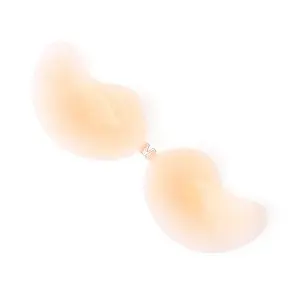
Two Cure Chemistries, and Why the Difference Reaches the Finished Part
Both systems start from a polydimethylsiloxane base, but they crosslink by different routes. In an addition-cure system, also called platinum-cure or platinum-catalysed hydrosilylation, a platinum complex catalyses the direct addition of silicon-hydride groups across vinyl groups on the polymer chains. The two functional groups link and nothing is split off. There is no small molecule leaving the network, which is why the reaction is described as having no by-product.
In a condensation-cure system, also called tin-cure, crosslinking happens between silanol end groups and a crosslinker such as an alkoxysilane or acetoxysilane, catalysed by an organotin compound such as dibutyltin dilaurate. This reaction does eliminate a small molecule, and the eliminated species is what later shows up as residual odour, as slow weight loss, and as a gradual change in optical clarity. The practical consequence is that a condensation-cure network is never fully “finished” at demould; it keeps equilibrating for a long period, and some of the chemistry that made the part continues to work on the part.
A second consequence concerns the network itself. Because addition cure builds links without losing mass, the network topology is closer to what the formulation intended, and mechanical properties are more predictable from batch to batch. Condensation cure proceeds through hydrolysis and re-condensation steps that are sensitive to ambient humidity, section thickness and catalyst level, so the same formulation can give measurably different results between a thin skin-contact membrane and a thick moulded section.
Shrinkage: What It Does to Tooling, Dimensions and Fit
Shrinkage is the property that most directly converts a chemistry choice into a commercial problem. Any volumetric change between the mixed liquid and the cured solid means the finished part is smaller than the cavity that produced it, and the amount of that change is not uniform across a complex three-dimensional surface.
The mechanism is straightforward. Condensation cure loses mass during crosslinking, so the network contracts as by-product leaves. Addition cure does not lose mass in the same way and therefore exhibits far lower linear change. For a flat disc, lower shrinkage may be invisible. For a nipple cover with a graduated edge, a breast form with a contoured back, or a mask that must register to a wearer’s facial landmarks, low and repeatable shrinkage is the difference between a part that seats correctly and one that lifts, gaps or distorts under its own weight.
Tooling is affected too. If a production mould was cut from a master produced by a different cure system, the replica will not match the original. This is the classic failure when a supplier duplicates a customer’s sample using a cheaper condensation system: the copy comes back slightly smaller, the edge profile is subtly different, and fit testing that passed on the reference sample fails on the production part. Buyers can control for this by asking which cure system was used for both the master and the production run, and by requesting that dimensional inspection be performed on parts that have completed the full post-cure cycle rather than on freshly demoulded ones.
Where Platinum-Cure Earns Its Cost
The advantages of addition cure are well established in skin-contact and optical applications. No by-product means no residual alcohol or acid odour and no continuing mass loss after demould. Low odour is not a cosmetic detail for intimate apparel; it is one of the first things a retail buyer notices when opening a carton, and it is a frequent cause of rejected shipments that are otherwise dimensionally correct.
Clarity is the second advantage. Because there is no phase-separated by-product and no residual catalyst haze, platinum systems can be formulated to high transparency, which matters for clear gel components, transparent edges on nipple covers and any part where colour matching must be judged against the skin rather than against the mould. Third, and most important for products worn against the body for hours, addition-cure networks are generally a better starting point for biocompatibility. With the correct formulation, adequate post-cure and control of extractables, they are the material family normally specified where prolonged skin contact is expected.
The offsetting difficulty is sensitivity. Platinum catalysts are poisoned by a surprisingly short list of contaminants, and the failure mode is unpleasant because it is often partial. A surface in contact with a contaminated substrate stays tacky or liquid while the rest of the part cures, and the defect may only be discovered after demould, when it is no longer correctable.
Where Tin-Cure Still Makes Sense, and Where It Does Not
Condensation systems retain real advantages. The catalyst is inexpensive, the working life and cure rate are easier to tune over a long working window, and the system is far more tolerant of the unavoidable contamination found in a busy moulding shop. For large, thick, non-skin-contact parts such as block moulds, display forms, prototype tools or thick section props where optical clarity is irrelevant and a long-term dimensional drift is acceptable, tin-cure remains a rational, cost-effective choice.
The limitations should be stated plainly for intimate apparel and body-worn goods. Measurable shrinkage affects dimensional repeatability across a size range. Residual by-product can continue to be released, which shows up as odour in sealed packaging and as a gradual loss of clarity or a shift toward yellow in transparent and light-pigmented formulations. Long-term reversion, where a network softens under warm humid storage, is a condensation-system risk in a way that it is not for a properly post-cured addition system. For a product that will be worn, washed, stored and re-worn, these are not academic concerns.
Inhibition and Poisoning: The Hidden Yield Risk
Inhibition is the partial or complete suppression of cure caused by a substance that ties up the platinum catalyst. The usual suspects are sulphur-containing compounds including natural rubber latex and vulcanised rubber, amines and amine-cured epoxies, organotin residues from condensation silicones, certain plasticisers, some printing inks and coatings, and a range of uncured or under-cured 3D printing resins. Residue on a mould, on a glove, on a release agent brush or on a workbench is enough to create a tacky patch.
Tip: ask your supplier whether platinum-cure and tin-cure production are physically separated, including moulds, mixing tools, gloves and post-cure ovens; shared tooling is one of the most common causes of unexplained tacky-surface rejections.
For the production line this translates into specific controls. Separate tool sets and separate mixing equipment for the two chemistries. Dedicated gloves, since latex and some nitrile formulations carry sulphur accelerators. Cleaning protocols for moulds that have been used for other materials. And a strict rule about master patterns: a master produced by stereolithography or material jetting must be fully cured, washed and ideally sealed before it is used to make a platinum-cure mould, otherwise the first production parts will inherit the inhibition from the pattern. Buyers rarely see these controls, but they can ask whether they exist, and a supplier who can describe them in detail is usually a supplier whose yield is under control.
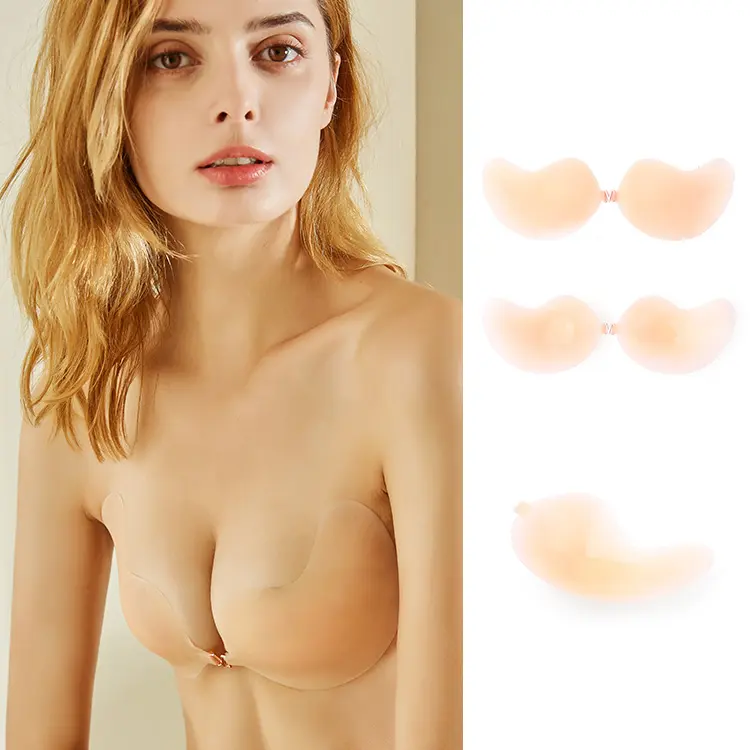
Hardness, Tear Strength and Elongation: The Skin-Contact Triangle
Shore hardness, typically measured on the Shore 00 or Shore A scale for soft gels and elastomers, describes resistance to indentation. It does not describe resistance to tearing, and procurement teams regularly conflate the two. A very soft formulation can be formulated with adequate tear strength, but achieving both simultaneously is a formulation challenge, and not every grade achieves it.
The relationship matters most at low durometer. Skin-contact products are soft precisely because they need to drape and conform, which means thin sections, tapered edges and often a very thin flash line at the perimeter. A thin edge is a stress concentrator. Every time the product is peeled from the skin, folded for storage, or flexed during wear, the load concentrates at that thin edge. If tear resistance is low, the part does not fail in the middle of the panel where the material is thick; it starts as a small nick at the edge and propagates. Elongation matters for the same reason: high elongation lets the edge redistribute stress instead of concentrating it, but elongation alone is not a substitute for tear resistance, and a specification that lists only elongation and hardness has left out the property that actually determines service life.
The practical guidance for buyers is to specify hardness and tear performance together, and to specify the section thickness at which they must hold. A tear value measured on a thick standard specimen does not predict the behaviour of a feathered edge on a nipple cover. Ask what thickness the data was generated at and whether the grade is intended for thin-section skin-contact use.
Physical Property Verification: How to Test Before You Commit
Property claims on a datasheet are typically generated under laboratory conditions on freshly prepared standard specimens. A purchasing decision should rest on a small number of inexpensive, repeatable checks agreed in advance rather than on a single number.
- Tear resistance: cut a standard nicked specimen and pull it on a tensile tester, or run a simple trouser-tear on production parts, and record the result at the actual wall thickness of your product rather than at a laboratory default.
- Tensile and elongation: pull to break on the same batch, and record the curve shape, not just the endpoints; a formulation that necks early behaves differently in wear than one that extends evenly.
- Permanent set: stretch a specimen to a defined extension, hold it for a defined time, release and measure residual deformation after a defined recovery period; this predicts whether a product will bag out after repeated wear.
- Yellowing and ageing: place production parts in a controlled heat or light ageing cycle alongside a retained reference, and compare colour by instrument or against a grey scale rather than by eye.
- Residual odour and extractables: after the full post-cure cycle, seal parts in the actual retail packaging, hold them warm, then open and assess; this reproduces the condition a retail buyer will experience.
- Sampling discipline: test across at least three production batches and across the size range, because thin and thick sections in the same batch can differ.
Each of these is a comparative method. The value is in consistency of method and in retaining reference samples, so that a future shipment can be judged against a retained approval sample rather than against a memory.
Where the Cost Gap Actually Comes From
Buyers often assume the platinum premium is simply the catalyst, and while the platinum complex is genuinely expensive, it is rarely the largest component of the price difference. Four factors usually dominate.
- Catalyst cost and loading: platinum is a precious metal with a volatile price, and it is used at low but non-trivial loading.
- Cleanliness requirements: because of inhibition, addition-cure production needs dedicated equipment, controlled handling, filtered or separated work areas, and stricter raw material segregation. That is capital and labour, not chemistry.
- Scrap rate: inhibited or partially cured parts cannot be reworked. Every tacky surface is a total loss, and the cost is loaded into the price of the good parts.
- Secondary post-cure: a controlled thermal post-cure cycle is standard for skin-contact addition-cure parts. It consumes oven time, energy and floor space, and it is the step most often shortened when a supplier is trying to hit a low price.
Understanding this list changes the negotiation. A quote that is dramatically below the market for a stated platinum-cure skin-contact product is usually a quote in which one of these four items has been quietly removed. The most common omission is the full post-cure cycle, and its symptom is odour in the carton rather than any visible defect.
Specification Language for Your RFQ
Ambiguity in the enquiry is the single largest source of quotation mismatch. Write the cure system into the specification rather than inferring it from a price, and cover the following points.
- Cure system: state addition-cure (platinum) or condensation-cure (tin) explicitly, and require the supplier to confirm which system was used for both the tooling master and the production parts.
- Hardness and tolerance: state the Shore scale, the target value and the acceptable tolerance range, and specify where on the part the measurement is taken.
- Tear strength: state the minimum requirement and the section thickness at which it must be met, since thin edges govern service life in skin-contact products.
- Transparency and colour: state whether the part must be optically clear, translucent or opaque, and provide a physical colour reference rather than a printed swatch.
- Odour: state that parts must be odour-neutral after the complete post-cure cycle and after sealed packaging, and name the assessment method you will use.
- Skin and food contact: state the intended contact duration and conditions so the supplier can select an appropriate grade and confirm suitable biocompatibility testing, rather than relying on a generic “body safe” claim.
- Post-cure: require confirmation that the specified thermal cycle is applied to every production batch, not only to approval samples.
Documentation and Incoming Inspection Checklist
Documentation is what makes a specification enforceable. Request the following and build the corresponding checks into goods receipt.
- Batch traceability: a lot number on the carton that maps back to raw material lots, the production date, the mould used and the post-cure record.
- Material declaration: a written statement of the cure system, the base polymer family, the pigment and additive system, and any restriction on substances relevant to your destination market.
- Skin irritation and biocompatibility testing: request test reports from an accredited third-party laboratory appropriate to the intended contact duration, and check that the report covers the actual finished material and colour, since pigments and additives can change the result.
- Property test reports: tensile, tear, elongation and hardness results for the specific batch or a recent representative batch, with the test method and specimen thickness stated.
- Retained reference samples: sealed and dated approval samples from the confirmed batch, kept by both parties as the arbitration standard for future shipments.
- Incoming inspection: verify lot numbers against documentation, check dimensions on parts that have completed post-cure, assess odour after opening sealed packaging, inspect edges for tackiness or tears, and compare colour against the retained reference.
- Change control: require written notice before any change to the cure system, the base material supplier, the pigment system or the post-cure cycle, since any of these can alter compliance and performance.
Handled this way, the cure system stops being an invisible technical detail and becomes a normal, auditable purchasing variable. Buyers who specify it, verify it and hold retained samples consistently receive fewer surprises on fit, odour and service life; buyers who specify only hardness and colour are, in effect, leaving the most important decision in the product unspecified.
Related Pages
Different Types of Silicone Nipple Covers Explained for Buyers
What Is a Silicone Nipple Cover? A Guide for Wholesale Buyers
Why Private Label Silicone Nipple Covers Are a Profitable Opportunity
Top Reasons Retailers Should Add Silicone Nipple Covers to Their Portfolio
Post time: Oct-28-2026