
Silicone Hand and Foot Molds: Manufacturing Process and Bulk Order Guide
Silicone hand and foot molds are reusable or single-use tooling components used to cast realistic silicone limbs, display prosthetics, film effects, and training aids. For buyers planning a bulk order, the most important first step is to separate the mold itself from the finished silicone product, because the two are governed by different tolerances, lead times, and cost drivers. A mold is the negative cavity that shapes liquid silicone into a hand or foot form. The finished piece poured from that mold is what the end market ultimately receives. This guide explains how a silicone product manufacturer structures the process and what a buyer should specify in a request for quotation. Understanding the manufacturing logic helps importers compare suppliers on equal terms rather than on headline price alone.
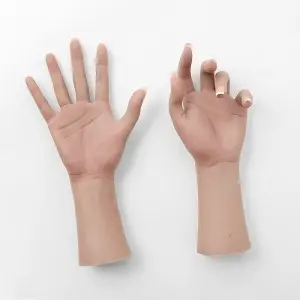
Product Definition and Channel Differences
The same silicone hand or foot form can serve very different commercial channels, and each channel changes the specifications a buyer should request. Understanding the channel early prevents ordering the wrong hardness, finish, or realism level, which is a common and expensive mistake in first-time programs. A mold built for a film close-up will not satisfy a bulk visual merchandising buyer, and a DIY hobby mold will not meet medical training documentation needs.
Film and Special Effects Props
- Film studios need high realism with visible skin texture, veins, and nail detail, but volume per order is usually low and repeat runs are irregular.
- Color matching to a specific actor or character is common, which pushes the order toward custom life-casting rather than a standard blank.
- These buyers tolerate longer development time because on-screen believability outweighs per-unit cost.
Window Display and Visual Merchandising
- Retail and museum displays use hands and feet mainly for pose and silhouette, so surface realism can be moderate while dimensional stability matters more.
- Buyers in this channel often order matched left-right pairs in larger quantities for multiple store locations.
- Consistency across many stores is more valuable here than one perfect hero sample.
Handmade DIY and Hobby Casting
- Hobbyists want affordable, easy-release molds and forgiving silicone that cures at room temperature.
- Order sizes are smaller and packaging usually needs clear instructions rather than retail presentation.
- The priority is repeatability at home, not cinematic detail.
Medical Training and Education
- Training models require anatomical accuracy and repeatable feel, with documentation on material safety and hardness.
- These buyers care about batch consistency more than cosmetic perfection, and they often need traceable lot records.
- Soft tissue simulation for procedure practice demands stable Shore values across reorders.
Form Classification: Palm, Arm, Sole, Calf, and Extension Types
Silicone hand and foot molds are grouped by the anatomical span they cover, and the span directly influences mold complexity, material use, and demolding risk. A buyer should name the exact span before tooling begins, because changing the span later means a new master and a new mold.
Palm and Hand Forms
- Palm-only molds capture the working surface of the hand and are simpler to demold than full fingers.
- Full-hand molds include fingers, which require thin wall sections and careful venting at the fingertip to avoid trapped air.
- Finger extension also increases the chance of tear during demolding if draft is insufficient.
Arm Extension Forms
- Arm molds extend from the wrist upward and are common in costume and display use.
- The longer the extension, the more critical the draft angle becomes to avoid locking the cast inside the cavity.
- Long thin sections also need longer cure times and more support during shipping.
Sole and Foot Forms
- Sole molds focus on the plantar surface and heel, often used for footwear fitting and display.
- Full-foot molds include the arch and ankle, increasing the cavity depth and cure time relative to a sole-only part.
- The heel is a thick section that demands zone hardness planning.
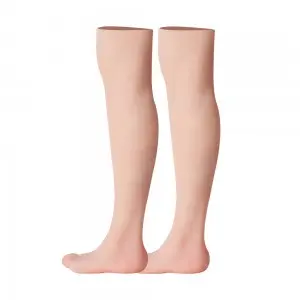
Calf and Ankle Extension Forms
- Calf molds extend from the ankle upward and share the demolding challenges of arm molds.
- Localized versus whole-limb decisions affect whether the parting line runs at the wrist or ankle.
- Whole-limb forms use more material and more mold steel, raising both unit and tooling cost.
Buyers should state whether they need a local segment such as a palm or sole, or a whole limb with wrist or ankle extension, because this single choice reshapes the entire mold layout and the packing method.
Master Patterns: Client Scan, Standard Blank, or Custom Life-Cast
The master pattern, also called the original or buck, is the positive shape the mold is made from. Three sourcing routes exist, and each changes cost, lead time, and who owns the shape. Selecting the right route is the foundation of a realistic and affordable program.
Client-Provided Scan or File
- The buyer supplies a 3D scan, CAD file, or physical reference item the factory replicates.
- This route gives the strongest control over a proprietary shape but depends on file quality and resolution.
- Poor scans create surface noise that must be cleaned before a master can be printed.
Factory Standard Blank
- The factory uses its own developed master for a common hand or foot size.
- This is the fastest and cheapest route and suits generic display or DIY demand.
- Standard blanks limit uniqueness but maximize repeatability across reorders.
Custom Life-Cast
- A real person is cast to capture individual anatomy, used for film and medical realism.
- This route adds a casting session, safety materials, and longer development time before tooling.
- life-casting delivers unmatched realism but the master is unique and cannot be reused for other clients without consent.
The choice of master pattern also decides who owns the original and who pays if the shape must be revised after the first samples. Buyers should confirm master ownership in writing before production starts.
Mold Engineering: Parting Line, Venting, Draft, and Cavity Count
Mold design is where most quality problems are prevented or created. Four engineering decisions matter most for hand and foot molds, and each should be reviewed at the quotation stage rather than after the tool is cut.
Parting Line Position
- The parting line is where the two mold halves meet, and its position controls where the visible seam lands on the finished piece.
- For hands, a parting line along the back of the hand and between fingers hides better than one across the palm.
- For feet, a sole-edge parting line is usually less visible than a top-of-foot line under display lighting.
Venting and Air Escape
- Vents let displaced air leave as silicone fills thin finger or toe sections.
- Poor venting is the leading cause of bubble trails at extremities and short-filled nail beds.
- Micro-venting at fingertips is essential for full-hand and full-foot molds.
Demolding Draft
- Draft is the slight taper that lets the cured piece release without tearing or dragging detail.
- Long extensions such as forearms and calves need more draft than compact palms.
- Insufficient draft causes surface scuffing that is hard to repair invisibly.
Single Cavity versus Multi-Cavity
- A single cavity mold is cheaper to build and easier to tune for realism and texture.
- Multi-cavity molds raise output per cycle but demand tighter process control to keep all cavities consistent.
- For paired products, cavity balance directly affects left-right matching.
Buyers should request the parting line drawing before tooling, because moving the seam after the mold is cut is expensive and sometimes impossible without rebuilding the tool.
Material Selection: Platinum vs General Silicone and Shore A Zoning
The silicone formulation decides skin safety, durability, and feel. Two families dominate the category, and hardness is planned in zones rather than uniform across the part. Material choice is one of the few levers that changes both cost and compliance at the same time.
Platinum-Cure versus General Silicone
- Platinum-cure silicone offers low odor, high clarity, and better long-term stability for skin-contact use.
- General silicone costs less and works for display pieces that do not touch skin or require certification.
- Platinum grades also resist yellowing, which matters for pieces stored under retail lighting.
Shore A Hardness Zoning
- The palm or sole is typically made softer for a lifelike squeeze, while fingertips and heels use a thicker, firmer section.
- Zoning is achieved by casting layers of different hardness rather than one uniform mix across the whole part.
- Shore A hardness zoning lets one piece feel soft where it should and hold shape where it must, improving both realism and durability.
Choosing platinum-cure silicone for skin-contact programs is usually worth the premium, whereas display-only buyers can specify general grades to control cost. The zoning plan should be written into the specification so reorders stay consistent.
Production Workflow: Vacuum Degassing, Pouring or Brushing, and Curing
The casting step turns mixed silicone into a finished hand or foot. The sequence below is typical for a quality-focused factory and should be reflected in the process description a supplier provides.
Vacuum Degassing
- Mixed silicone is placed under vacuum to remove entrapped air before it enters the mold.
- This step reduces internal bubbles that would otherwise show as surface pits and weak spots.
- Degassing time scales with batch size and viscosity of the formulation.
Pour or Brush Application
- Pour molding fills the cavity from one gate and suits symmetrical whole limbs and high volume.
- Brush molding builds thin layers by hand and suits complex textures and hollow shells.
- Brush work is slower but gives better control over wall thickness and embedded detail.
Curing Temperature and Time
- Cure temperature and dwell time are controlled to reach full crosslink without degrading detail.
- Thicker sections such as heels need longer cure than thin finger walls to avoid under-cure.
- Over-cure can harden the surface and dull fine texture, so the window is narrow.
Controlling vacuum degassing discipline is the single biggest factor in clean, bubble-free extremities on a production line. Buyers should ask how the supplier verifies degassing rather than assuming it happens.
Surface Treatment: Matte Finish, Skin Texture, and Nail Detail
Realism is built in the surface steps after demolding. These operations are labor-intensive and should be quoted separately for custom work, because they are easy to underestimate in a bulk program.
Matte and Sheen Control
- A matte finish avoids the plastic shine that betrays a fake limb under showroom light.
- Sheen is adjusted with surface agents or a light powder treatment after cure.
- Consistent sheen across a batch is harder than achieving it on a single hero piece.
Skin Texture and Veins
- Texture is transferred from the master or added by hand for film-grade pieces.
- Subtle vein and muscle tone are painted or embedded rather than molded for most buyers.
- Hand-painted detail raises unit cost and should be sampled before committing to volume.
Nail Detail
- Fingernail and toenail definition is sculpted into the master and can be tinted separately.
- Nail realism is a common upgrade requested by display and costume channels.
- Poor nail edges are one of the fastest ways to make a piece look artificial.
Common Molding Defects and How to Control Them
Even experienced factories face recurring defects in hand and foot molding. Knowing the failure modes helps a buyer read a quality report and ask the right corrective questions during production.
Bubbles and Voids
- Cause: insufficient degassing or blocked vents at fingertips and toes.
- Control: verify vacuum step and add micro-venting at extremities on the tool.
- Effect: surface pits that are visible under close retail or camera inspection.
Short Filling and Missing Detail
- Cause: low injection pressure or cold silicone that gels before filling thin sections.
- Control: warm the mix slightly and keep gates and runners unobstructed.
- Effect: missing nail beds or incomplete fingertip contours on random pieces.
Parting Line Flash
- Cause: mold mismatch or excess clamp pressure forcing material out of the seam.
- Control: maintain registration pins and trim flash at the finished-goods stage.
- Effect: a ridge along the seam that must be deburred before packing.
Hardness Variation and Layering
- Cause: inconsistent mix ratio or uneven layer cure between soft and firm zones.
- Control: calibrated dispensing and staged curing for zoned hardness plans.
- Effect: one piece feels firmer than its pair, breaking the matched-set promise.
Size Consistency and Left-Right Pairing Control
For display and costume use, a mismatched left and right hand or foot is immediately visible and damages the end presentation. Consistency is enforced at three levels, and a buyer should confirm all three are in the supplier workflow.
Master Verification
- The left and right masters are measured against each other before any mold is cut.
- Symmetry tolerance is agreed in writing as part of the first article acceptance.
- Small master errors multiply across every cavity and every reorder.
In-Process Measurement
- Random pieces from each batch are checked for length, width, and wall thickness.
- Paired sets are bagged together to avoid mixing across batches and cavities.
- Measurement records support complaint handling if a defect appears at destination.
Pairing Packaging
- Matched pairs are sealed as a unit so the end user receives a true, symmetrical set.
- This step is simple but often skipped by low-cost suppliers under time pressure.
- Pair-level labeling is the cheapest insurance against mismatched shipments.
MOQ, Sampling Lead Time, and Tooling Fee Ownership
Buyers frequently ask for fixed numbers, but responsible suppliers quote these items case by case because the variables differ by program. The method below explains how to judge a fair offer without assuming a universal figure that may not apply to your project.
Minimum Order Quantity
- MOQ depends on mold cavity count, material grade, and whether the master is custom or standard.
- A standard blank program can start lower than a fully custom life-cast program with unique tooling.
- MOQ should be justified by the supplier, not accepted as an unexplained floor.
Sampling Lead Time
- Sampling time scales with master route, surface finish, and color complexity of the request.
- A file-based standard blank samples faster than a custom life-cast requiring a casting session.
- Sample lead time should include first article inspection, not just the first pour.
Tooling Fee Ownership
- The tooling fee question is whether the mold is amortized into unit price or billed separately and owned by the buyer.
- Ownership should be defined in the contract, including who keeps the master if the program ends.
- Some suppliers retain the master and recharge setup, others transfer it on final payment.
Rather than asking for a fixed number, ask the supplier to state the basis of their MOQ, sample time, and tooling fee so you can compare offers on equal terms. A transparent basis is a stronger signal of a reliable partner than any single low quote.
Packaging and Shipping: Anti-Stick and Anti-Deformation
Silicone sticks to itself and deforms under pressure, so packaging is a real quality step, not an afterthought. Damage during transit is a leading cause of claims on limb-shaped silicone goods, and most of it is preventable with correct packing.
Anti-Stick Treatment
- A dusting of talc or a release film keeps stacked pieces from bonding during long transit.
- Plastic separator sheets are used for premium paired sets and painted surfaces.
- Too much powder can dull a matte finish, so the amount is part of the spec.
Anti-Deformation Support
- Long extensions are shipped with internal or external supports to hold shape in the carton.
- Boxes are sized to prevent compression by heavier cargo stacked above during shipping.
- Support material must be clean and non-staining on platinum-cure surfaces.
Labeling and Traceability
- Each pair is labeled with batch and cavity where consistency matters to the buyer.
- Clear labeling speeds complaint handling if a defect appears at the destination warehouse.
- Traceability also helps reorders match the approved first article exactly.
RFQ Information Checklist for Buyers
A complete request for quotation lets a factory quote accurately on the first try and reduces the risk of a mismatch between expectation and delivery. Include the following items so the supplier can respond with a comparable offer.
Shape and Reference
- Master route: client scan, factory blank, or custom life-cast, with files or samples attached.
- Target anatomy: palm, full hand, sole, full foot, or limb extension with wrist or ankle.
- Left-right pairing requirement and acceptable symmetry tolerance for the program.
Material and Finish
- Silicone family: platinum-cure or general, with Shore A zoning if a specific feel is required.
- Surface finish: matte, skin texture, nail detail, and any color reference or pantone target.
- Any certification needs such as skin-contact compliance for the destination market.
Quantity and Logistics
- Estimated order quantity, target market, and whether paired sets are required by the channel.
- Packaging expectation: anti-stick, supports, and retail or bulk presentation at destination.
- Destination port and preferred incoterms to align commercial responsibility.
Commercial Terms
- Clarify sampling expectation, tooling fee ownership, and first article inspection criteria.
- State documentation needs such as commercial invoice details and material declarations.
- Agree on reorder cadence so the supplier can plan cavity availability for your program.
Supplying this checklist turns a vague inquiry into a comparable quotation and shortens the path from sample to bulk production. It also surfaces hidden cost drivers such as master ownership and inspection before they become disputes.
Related Pages
- Different Types of Silicone Nipple Covers Explained for Buyers
- What Is a Silicone Nipple Cover? A Guide for Wholesale Buyers
- Why Private Label Silicone Nipple Covers Are a Profitable Opportunity
- Top Reasons Retailers Should Add Silicone Nipple Covers to Their Portfolio
Tip: Always confirm whether the quoted price includes the master pattern and the first article inspection, because these two items frequently change the real landed cost more than the per-unit molding rate.
Ready to source silicone hand and foot molds with a verified manufacturing partner?
Post time: Oct-21-2026